10 AI Agents in Insurance Use Cases (2026)
- #AI Agents
- #Insurance AI
- #Insurtech
- #Claims Automation
- #Underwriting AI
- #Insurance Technology
- #Fraud Detection AI
- #Enterprise AI
How AI Agents Are Transforming Insurance Operations in 2026
The insurance industry is undergoing its most significant technological shift in decades. AI agents in insurance are no longer experimental pilots. They are production-grade systems processing millions of claims, underwriting policies in real time, and detecting fraud patterns that human analysts miss entirely.
Insurance carriers that deployed AI agents early are already reporting 30% reductions in operational costs and 60% faster claims settlements. Meanwhile, companies still relying on manual workflows are losing ground to competitors who can offer instant quotes, same-day claim approvals, and personalized policy recommendations at scale.
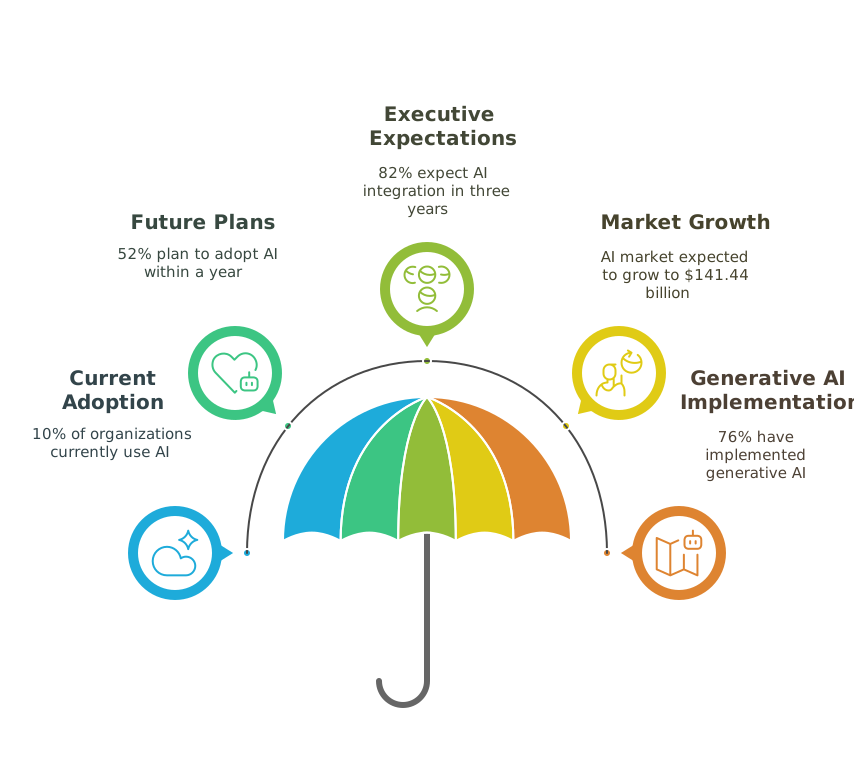
According to Precedence Research, the global AI in insurance market is projected to reach $141.44 billion by 2034, growing at a compound annual growth rate (CAGR) of 33.06%. A 2025 Capgemini survey found that 82% of insurance executives plan to integrate AI agents within three years. Deloitte reports that 76% of U.S. insurance firms have already implemented generative AI capabilities in at least one business function, with claims processing and customer service leading adoption.
The question for insurance carriers, MGAs, and brokerages is no longer whether to adopt AI agents. It is how fast they can deploy them before the competitive gap becomes insurmountable.
Why Do Insurance Companies Lose Money Without AI Agents?
Insurance companies without AI agents face compounding inefficiencies that directly erode profitability. Manual processes create bottlenecks across claims, underwriting, and customer service that cost carriers millions annually.
1. Slow Claims Processing Drives Customer Churn
Traditional claims workflows require multiple handoffs between adjusters, reviewers, and payment processors. Each handoff introduces delays of 3 to 5 business days. Policyholders waiting weeks for claim resolution are 40% more likely to switch carriers at renewal. This attrition costs mid-size insurers an estimated $15M to $25M per year in lost premium revenue.
2. Manual Underwriting Creates Pricing Errors
Human underwriters reviewing applications one at a time cannot access real-time data from IoT devices, credit bureaus, and external risk databases simultaneously. This leads to mispriced policies where premiums either fail to reflect actual risk, causing losses, or overcharge low-risk customers, driving them to competitors. Carriers using AI agents in crop insurance have already demonstrated how automated risk assessment eliminates these pricing gaps.
3. Fraud Goes Undetected Until It Is Too Late
Insurance fraud costs the U.S. industry over $80 billion annually. Manual fraud investigation teams can only review a fraction of flagged claims. Without AI-powered pattern recognition, sophisticated fraud rings using synthetic identities and deepfake documentation slip through traditional review processes undetected.
| Challenge Without AI | Annual Cost Impact | AI Agent Solution |
|---|---|---|
| Slow claims processing | $15M-$25M in customer churn | Instant validation and auto-approval |
| Manual underwriting errors | 5-12% mispriced policies | Real-time multi-source risk scoring |
| Undetected fraud | $80B+ industry-wide losses | Pattern recognition and anomaly flagging |
| High call center volume | $8M-$15M in staffing costs | AI chatbots handling 90% of inquiries |
| Compliance violations | $2M-$10M in regulatory fines | Automated audit trails and reporting |
Stop losing millions to manual insurance operations. Digiqt builds AI agent solutions that eliminate these costly inefficiencies.
Visit Digiqt to learn how we help insurance carriers deploy production-ready AI agents.
What Are AI Agents and How Do They Work in Insurance?
AI agents are autonomous software systems that use machine learning, natural language processing (NLP), and automation to perform complex insurance tasks without continuous human oversight. They analyze data, learn patterns, make decisions, and execute actions across claims, underwriting, fraud detection, and customer service workflows.
Unlike simple rule-based automation, AI agents adapt to new information. They improve their decision-making accuracy over time by learning from every claim processed, every fraud pattern detected, and every customer interaction handled. For a foundational overview, visit our detailed guide on What are AI agents.
1. How AI Agents Differ from Traditional Insurance Software
Traditional insurance software follows static rules. If a claim meets criteria X, approve it. If not, route it to a human. AI agents go further by evaluating hundreds of variables simultaneously, weighing probabilities, and making nuanced decisions that account for context, history, and real-time data.
2. Core Technologies Powering Insurance AI Agents
AI agents in insurance combine multiple technologies including large language models (LLMs) for document understanding, computer vision for damage assessment, predictive analytics for risk scoring, and reinforcement learning for continuous optimization. These technologies work together to create agents capable of handling end-to-end insurance workflows autonomously.
What Are the Top 10 Use Cases of AI Agents in Insurance?
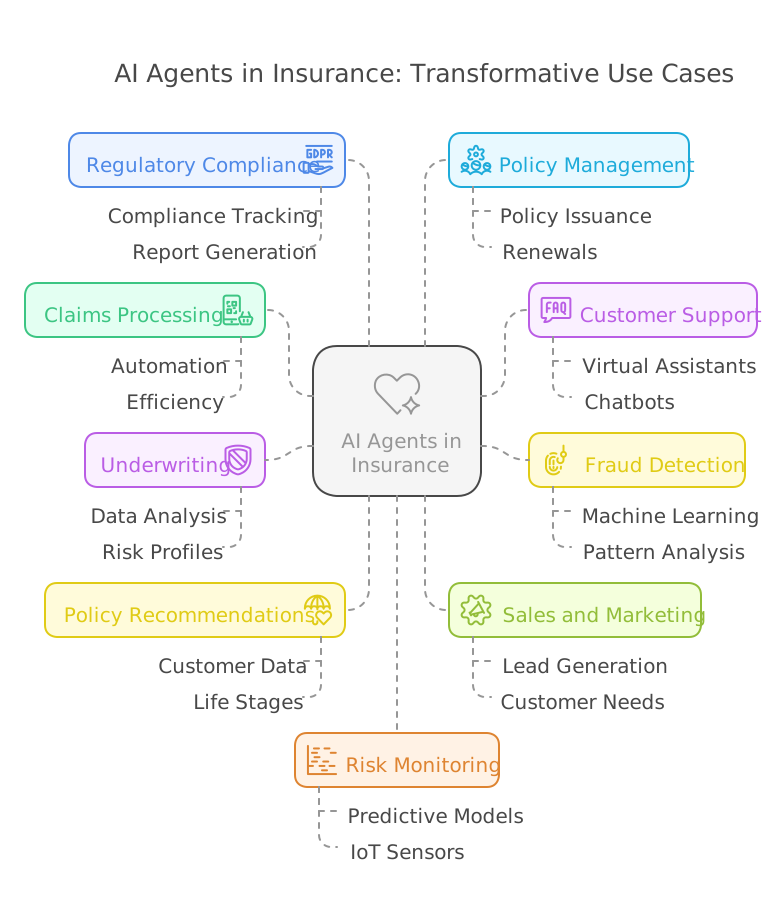
AI agents in insurance are transforming every major function across the insurance value chain, from first notice of loss to policy renewal. Here are the ten most impactful use cases driving measurable ROI for carriers today.
1. Claims Processing and Settlement Automation
Traditionally, claims processing required manual verification, multiple back-and-forth communications, and significant time investments. With AI agents, insurers streamline these processes by automatically validating information, cross-checking against databases, and issuing payments when conditions are met. This automation reduces the time required for claim settlements from weeks to hours, significantly enhancing customer satisfaction. AI-driven claims systems also identify patterns of suspicious activity, helping reduce fraudulent claims. Companies exploring AI agents for insurance claims are seeing settlement times drop by over 60%.
2. Customer Support and Engagement
Virtual assistants and chatbots provide 24/7 customer support, answering queries, guiding policyholders through processes, and helping with claims filing. Unlike traditional customer service teams that operate within fixed hours, AI agents offer real-time assistance across multiple channels such as websites, mobile apps, and messaging platforms. These agents handle routine interactions, freeing human agents to focus on complex issues. As AI learns from each interaction, it becomes more capable of addressing nuanced questions, ensuring customers receive consistent, accurate, and personalized responses.
3. Fraud Detection and Prevention
AI agents use machine learning algorithms to analyze patterns and detect anomalies indicative of fraudulent activities. Insurance fraud is a significant challenge, with billions of dollars lost annually to deceptive claims. By analyzing historical data, transaction patterns, and contextual information, AI agents detect inconsistencies and irregularities that might indicate fraud. For example, if a policyholder suddenly submits multiple claims in a short period or their claim details differ from established patterns, the AI system flags the case for further investigation. Companies implementing AI agents in cyber insurance are using similar pattern detection to combat emerging digital fraud vectors.
4. Underwriting and Risk Assessment
AI-powered underwriting tools assess risks more accurately by analyzing vast datasets, including historical claims, customer profiles, and external sources. Traditionally, underwriters relied on manual processes and static rules to evaluate risks, which could lead to inconsistencies and missed opportunities. With AI agents, insurers access real-time data from multiple sources such as medical records, driving histories, and IoT devices to build holistic risk profiles. These agents improve the precision of risk evaluations and help insurers price policies more competitively. Learn how this applies specifically to AI agents in life insurance where risk profiling is especially complex.
5. Personalized Policy Recommendations
AI agents analyze customer data to suggest personalized insurance policies based on individual needs, behaviors, and life stages. For example, a young driver might receive recommendations for safe-driving programs, while a homeowner might be informed about disaster insurance options based on regional climate risks. This personalized approach increases customer engagement and improves cross-selling and upselling opportunities. By using advanced data analytics, insurers deliver customized offers that resonate with customers' unique requirements, ultimately improving satisfaction and retention rates.
6. Sales and Marketing Automation
AI-driven systems assist insurance agents by generating leads, predicting customer needs, and automating follow-up communications. Insurance marketing traditionally involved mass outreach with limited personalization. Today, AI agents analyze browsing behaviors, social media interactions, and past transactions to identify potential customers and recommend suitable products. Automated email sequences and chatbot interactions nurture leads over time, resulting in more conversions and higher sales productivity.
7. Regulatory Compliance and Reporting
Insurance companies must adhere to stringent regulations, such as GDPR, HIPAA, and local insurance laws. AI agents help track compliance requirements, generate reports, and ensure that all operations align with regulatory standards. For example, AI systems automatically redact sensitive information, ensure that data is stored securely, and generate audit trails for regulators. By automating compliance processes, insurers minimize the risk of human error and avoid costly penalties while staying transparent with regulators and customers alike.
8. Policy Administration and Management
AI agents streamline policy issuance, renewals, and cancellations by automating data entry and validation processes. Managing policies manually is prone to errors and delays, particularly when dealing with high volumes of data. With AI-driven automation, insurers efficiently manage policy changes, detect inconsistencies in customer information, and communicate updates proactively. This automation reduces administrative overhead and enhances operational efficiency, ensuring policies are accurately managed throughout their lifecycle.
9. Risk Monitoring and Predictive Analytics
AI agents continuously monitor insured assets and environments to assess potential risks. Predictive analytics models analyze real-time data from various sources, such as IoT sensors, weather forecasts, and historical claims data, to anticipate potential risks. In property and casualty insurance, AI can predict the likelihood of weather-related damages and alert policyholders to take preventive measures. This proactive approach reduces claim costs and strengthens customer trust. Carriers managing agricultural portfolios are seeing particular benefits from AI agents in crop insurance for weather-based risk monitoring.
10. Healthcare and Life Insurance Assistance
In health and life insurance, AI agents support claim processing, policy recommendations, and customer inquiries. Health insurers are increasingly using AI to assess medical records, detect billing anomalies, and predict patient risks. These agents provide policyholders with personalized health advice, suggest wellness programs, and streamline claims by automatically verifying medical information. AI agents also help insurers manage complex health policies more efficiently, ensuring accurate benefit calculations and faster service delivery.
What Industry Leaders Are Saying About AI Agents in Insurance?
Industry leaders across global insurance carriers have recognized AI agents as essential to competitive survival. Their insights reveal a consistent theme: insurers who delay AI adoption risk irrelevance.
Brian Duperreault, former CEO of AIG, stated that the adoption of AI agents is critical to staying competitive and that insurers who fail to embrace AI will struggle to meet evolving customer needs.
Thomas Buberl, CEO of AXA, emphasized that AI agents are redefining customer engagement with the ability to deliver personalized experiences at scale.
Oliver Bate, CEO of Allianz, noted that intelligent automation through AI agents is helping insurers shift from reactive to proactive service, anticipating customer needs before they arise.
Mike Wells, former CEO of Prudential, highlighted that AI is transforming every aspect of insurance, from underwriting to claims processing, describing these agents as digital partners that empower teams to focus on higher-value tasks.
Deloitte's Global Insurance Outlook confirms that insurers who adopt AI agents early will likely experience higher profitability through improved operational scalability and reduced administrative overhead.
What Are the Challenges of Implementing AI Agents in Insurance?
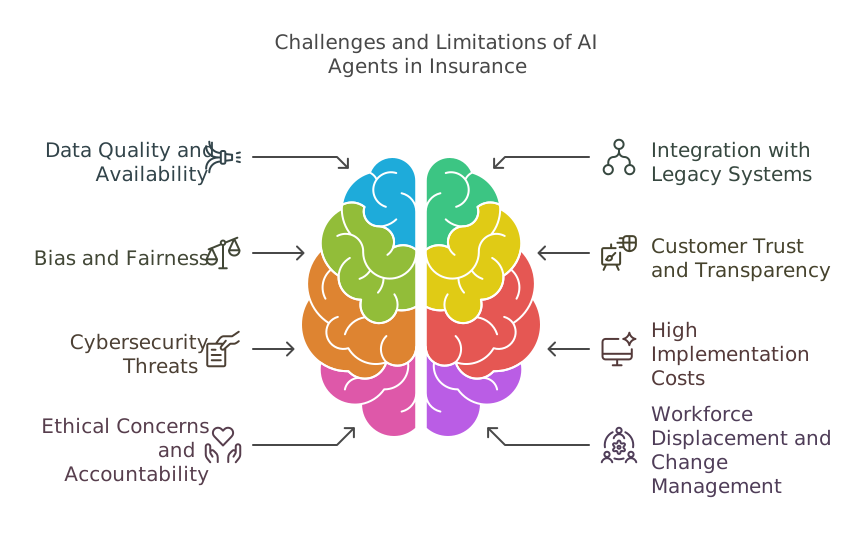
While AI agents in insurance offer transformative potential, their implementation requires addressing several technical, organizational, and regulatory challenges. Carriers that plan for these challenges upfront achieve faster deployment timelines and better ROI.
1. Data Quality and Availability
AI models rely heavily on high-quality, accurate, and diverse data to perform effectively. Inconsistent, incomplete, or outdated data leads to erroneous predictions. Insurance companies often face difficulties integrating data from legacy systems, resulting in data silos that hinder AI agent performance. Ensuring data hygiene, consistency, and proper labeling is crucial to the success of AI-driven initiatives.
2. Integration with Legacy Systems
Many insurance companies operate on outdated infrastructure, making it challenging to integrate modern AI solutions. Legacy systems may lack the necessary interfaces for real-time data exchange, requiring significant investment in middleware and system upgrades. Transitioning to AI-driven processes demands careful planning, testing, and incremental implementation to avoid operational disruptions.
3. Bias and Fairness in Decision-Making
AI models can inadvertently learn and propagate biases present in historical data, potentially leading to unfair or discriminatory outcomes. For instance, biased algorithms might unfairly deny coverage to certain demographic groups or regions. Insurers must implement fairness-aware machine learning practices, conduct regular audits, and adopt bias mitigation techniques to ensure ethical AI applications.
4. Customer Trust and Transparency
Many customers are wary of AI-driven decisions, particularly when it comes to critical matters like claims approvals or premium calculations. Lack of transparency in AI decision-making processes can erode trust. Providing clear explanations, offering human oversight, and educating customers on AI's role help build confidence in AI-driven services.
5. Cybersecurity Threats
AI agents, like any digital systems, are susceptible to cyberattacks, data breaches, and adversarial manipulations. Insurers must implement robust cybersecurity protocols, including encryption, anomaly detection, and continuous monitoring, to safeguard AI systems and customer data. Regular security audits and employee training are essential to mitigating potential risks.
6. Implementation Costs
Developing, deploying, and maintaining AI agents requires careful ROI planning. Costs include infrastructure upgrades, data acquisition, model training, and ongoing maintenance. Pre-trained foundation LLM models like GPT, Gemini, LLaMA, and Grok can significantly reduce development costs for AI agents. To maximize ROI, insurers should prioritize high-impact use cases and explore partnerships with AI technology providers like Digiqt.
7. Ethical Concerns and Accountability
AI agents introduce ethical dilemmas related to privacy, accountability, and fairness. Insurers must clearly define responsibility for AI-driven decisions, especially in sensitive areas like claims denials and risk assessments. Establishing AI ethics committees and adopting frameworks like AI Explainability and Transparency principles can guide ethical implementation.
8. Workforce Displacement and Change Management
The adoption of AI agents may lead to concerns about job displacement, particularly in roles like claims processing and customer service. Insurers should invest in reskilling and upskilling programs to help employees transition to new, AI-augmented roles. Change management strategies, including transparent communication and employee involvement, can ease the transition and foster a positive, innovation-friendly culture.
What Are the Fraud Risks with AI Agents in Insurance?
As AI agents become more prevalent in the insurance industry, they bring efficiency and improved decision-making. However, their widespread adoption also introduces new fraud risks that insurers must actively address. Fraudsters are evolving their tactics to exploit vulnerabilities in AI-driven systems.
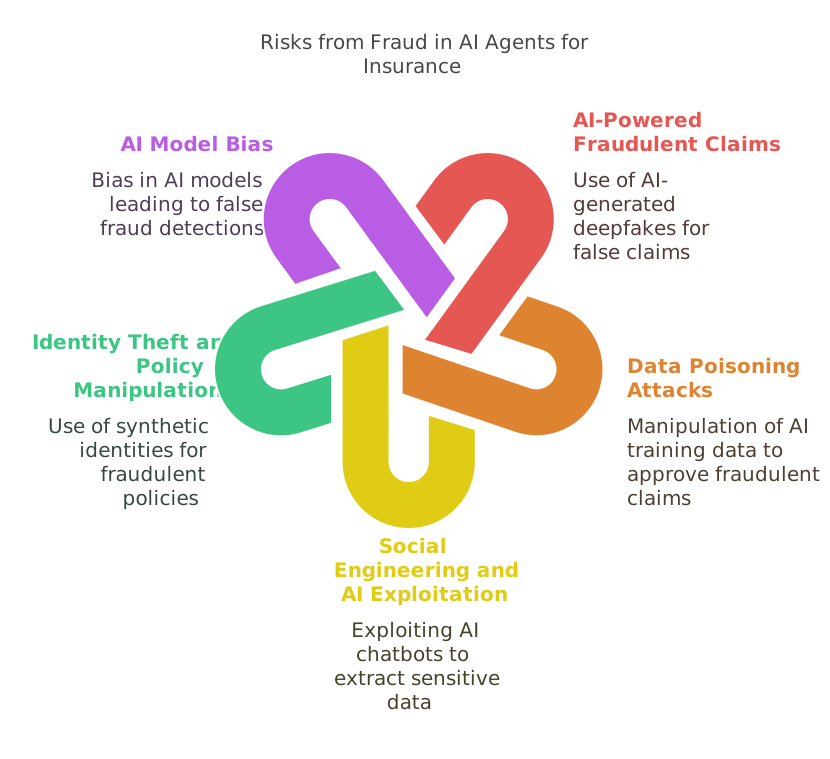
1. AI-Powered Fraudulent Claims
Fraudsters are using AI-generated deepfake documents, synthetic identities, and manipulated images or videos to create false claims. AI can be tricked into verifying fraudulent claims if not properly trained to detect anomalies.
Example: A fraudster submits a deepfake video or image of a staged car accident to an AI claims processor, which mistakenly validates the claim.
Mitigation: Use AI-based fraud detection tools to cross-check claims against historical data. Implement computer vision algorithms to verify document authenticity.
2. Data Poisoning Attacks
Fraudsters can manipulate AI training data by injecting false information, leading to biased or incorrect claim assessments. This can result in fraudulent claims being approved while legitimate ones are denied.
Example: Hackers inject fake claim patterns into AI training data, making the AI misidentify fraudulent patterns as normal claims.
Mitigation: Regularly audit AI training data to detect anomalies. Use adversarial testing to evaluate AI model vulnerabilities.
3. Social Engineering and AI Exploitation
Hackers can manipulate AI-powered chatbots or virtual assistants to extract sensitive customer data through social engineering attacks. This data can then be used for identity theft or fraudulent claims.
Example: A fraudster uses automated scripts to interact with an AI chatbot, gathering policyholder information for impersonation.
Mitigation: Implement strict authentication protocols for AI-driven interactions. Monitor AI conversations for suspicious activities.
4. Identity Theft and Policy Manipulation
Fraudsters can use stolen identities or synthetic identities to purchase policies and later submit fraudulent claims. AI agents may struggle to detect these cases without robust verification systems.
Example: A criminal uses AI-generated fake identities to purchase multiple policies and submits false claims across different insurers.
Mitigation: Deploy AI-driven identity verification using biometric authentication and document validation. Cross-check new policies against historical fraud databases.
5. AI Model Bias Leading to False Fraud Detection
If AI models are trained on biased datasets, they may incorrectly flag legitimate claims as fraudulent, causing delays for genuine customers. Fraudsters may exploit these biases to work around detection algorithms.
Example: An AI system trained on outdated fraud patterns might fail to detect new fraud techniques while wrongly denying legitimate claims.
Mitigation: Continuously update AI fraud detection models with evolving fraud tactics. Use explainable AI (XAI) to understand how fraud detection decisions are made.
How Should Insurance Companies Identify the Right AI Use Case?
Finding the right use case for AI agents in the insurance industry requires a strategic approach. AI agents can significantly improve efficiency, customer experience, and decision-making, but selecting the right use case ensures maximum impact and return on investment.
You can reach out to Digiqt to explore the next best AI agents use case for your organization.
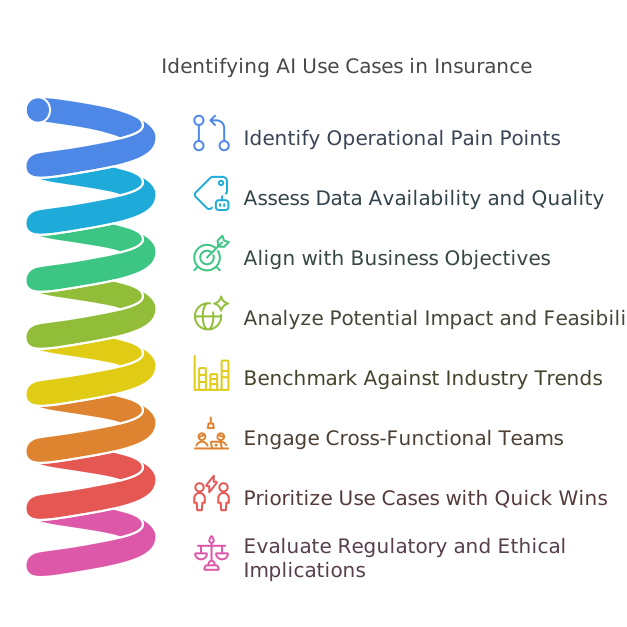
1. Identify Operational Pain Points
Begin by analyzing your company's existing processes to identify areas of inefficiency or high operational costs. Look for tasks that are repetitive, time-consuming, and prone to human error. In insurance, this might include distribution, claims processing, policy administration, customer support, and fraud detection. Engage with frontline employees and gather their insights on everyday challenges, as they often have the most direct understanding of process bottlenecks.
2. Assess Data Availability and Quality
AI agents require substantial amounts of high-quality, structured data to perform effectively. Evaluate whether your organization has the necessary data assets to support an AI-driven use case. Claims history, customer interactions, underwriting details, and risk profiles are essential datasets in insurance. Ensure that data is accessible, clean, and compliant with privacy regulations like GDPR, HIPAA, or industry-specific standards.
3. Align with Business Objectives
The AI use case should directly contribute to your company's strategic goals. Whether your focus is on improving customer satisfaction, reducing costs, or enhancing fraud detection, ensure the selected use case aligns with these objectives. For example, if customer retention is a priority, consider deploying AI agents for personalized policy recommendations or proactive customer service.
4. Analyze Potential Impact and Feasibility
Assess the potential impact of AI on the identified processes by estimating cost savings, efficiency gains, and customer experience improvements. Simultaneously, evaluate the technical feasibility of implementing AI agents. Consider factors like system integration complexity, required infrastructure, and availability of skilled personnel. Tools like cost-benefit analyses and pilot studies can provide insights into the expected ROI and implementation challenges.
5. Benchmark Against Industry Trends
Study how industry leaders and competitors are leveraging AI agents in insurance. Learning from their successes and challenges provides valuable insights and helps identify high-impact use cases. Analyze case studies from companies like Allianz, AXA, and Ping An Insurance, which have successfully integrated AI for tasks like claims automation, fraud detection, and customer engagement. The Acko insurance automation case study demonstrates how digital-first insurers are setting new benchmarks.
6. Engage Cross-Functional Teams
Form a cross-functional team that includes members from IT, operations, claims, underwriting, and customer service. Diverse perspectives help identify overlooked opportunities and address potential implementation challenges early. Involve end-users throughout the process to ensure the AI solution meets operational needs and gains broader organizational support.
7. Prioritize Use Cases with Quick Wins
Start with use cases that promise high impact and relatively easy implementation. Quick wins build organizational confidence in AI technologies and provide learnings for more complex projects. For instance, deploying a virtual assistant for customer queries requires less infrastructure than developing a predictive underwriting model but can immediately enhance customer experience.
8. Evaluate Regulatory and Ethical Implications
Insurance is a highly regulated industry, and AI implementations must comply with applicable laws and ethical standards. Assess potential risks related to bias, data privacy, and transparency. Implement governance frameworks that ensure AI models are fair, explainable, and compliant with industry regulations.
9. Pilot and Test the AI Solution
Before a full-scale rollout, conduct pilot projects to test the chosen AI solution. Measure key performance indicators (KPIs) like process efficiency, accuracy, cost savings, and customer satisfaction. Gather feedback from users to identify areas for improvement and ensure the solution delivers the expected benefits.
10. Develop a Scalable Implementation Plan
Once the pilot phase is successful, create a detailed implementation roadmap that outlines the steps for scaling the AI agent across the organization. Ensure scalability by investing in adaptable infrastructure and continuously updating models based on new data and performance metrics.
What Are the Best Practices for Successful AI Agent Implementation?
Implementing AI agents in the insurance industry can unlock significant efficiencies, improve customer service, and streamline complex processes. However, successful implementation requires a strategic and well-planned approach.
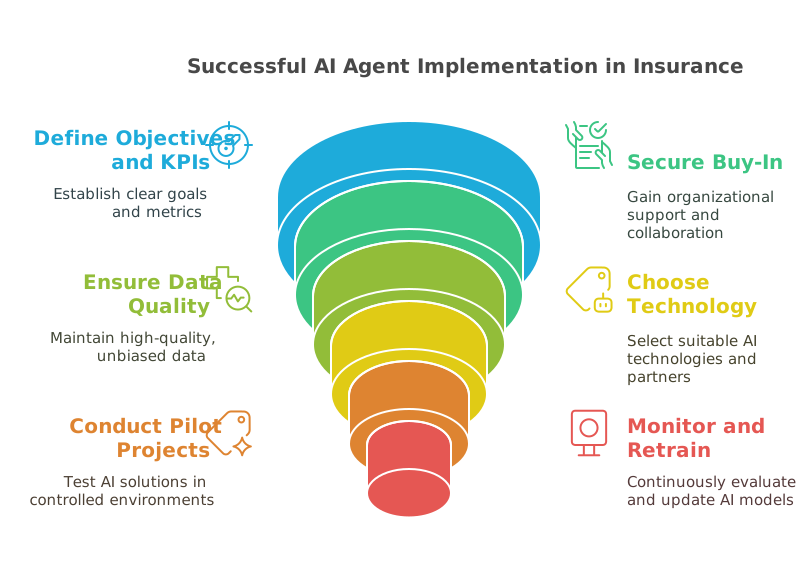
1. Define Clear Objectives and KPIs
Start by defining clear objectives for your AI implementation. Are you aiming to improve claims processing time, enhance fraud detection, or provide personalized customer experiences? Establish Key Performance Indicators (KPIs) to measure the impact of AI agents. Metrics like claim processing time, customer satisfaction scores, and fraud detection accuracy help track success. Communicate these objectives clearly across teams, ensuring everyone understands the goals and their roles in achieving them.
| KPI Category | Metric | Target Benchmark |
|---|---|---|
| Claims Efficiency | Average settlement time | Under 48 hours |
| Fraud Detection | Fraud identification rate | 90%+ accuracy |
| Customer Experience | NPS score improvement | 15-25 point increase |
| Cost Reduction | Operational cost savings | 25-35% reduction |
| Underwriting Speed | Policy approval time | Under 4 hours |
| Compliance | Audit pass rate | 99%+ compliance |
2. Secure Executive and Cross-Departmental Buy-In
AI implementation is not just an IT initiative. It requires support across the organization. Involve executives and key stakeholders early in the planning process. Foster collaboration between IT, operations, claims, underwriting, and customer service teams to ensure alignment and shared accountability. Senior leadership should advocate for the initiative, providing the necessary resources and championing the importance of AI adoption.
3. Invest in High-Quality, Clean Data
The performance of AI agents hinges on the quality of the data they are trained on. Ensure that data is accurate, complete, and free from biases. Conduct regular data audits and establish data governance frameworks to maintain data integrity. Leverage historical claims data, customer interactions, and external datasets to train AI models effectively. Poor-quality data leads to inaccurate predictions and unreliable outcomes.
4. Choose the Right AI Technology and Partners
Selecting the right AI platforms and tools is crucial. Evaluate solutions based on scalability, compatibility with existing systems, and ease of integration. Partner with experienced AI vendors and consultants who understand the insurance industry's unique requirements, such as regulatory compliance and risk management. Conduct thorough market research to compare solutions.
5. Start with Pilot Projects
Instead of deploying AI across the entire organization, start with pilot projects targeting high-impact, low-complexity areas. Use these pilots to test assumptions, refine models, and address unforeseen challenges. Once the pilot demonstrates success, scale the solution incrementally. During the pilot phase, collect feedback from end-users to identify potential issues early.
6. Ensure Regulatory Compliance and Ethical AI Practices
The insurance industry is governed by strict regulatory requirements regarding data privacy, transparency, and fairness. Implement AI models that adhere to regulations such as GDPR, HIPAA, and industry-specific guidelines. Develop frameworks to monitor AI decisions for bias, accuracy, and compliance. Collaborate with legal and compliance teams from the outset.
7. Focus on Change Management and Workforce Readiness
AI adoption often requires changes in existing workflows and job roles. Prepare your workforce for this shift through comprehensive training and upskilling programs. Communicate the benefits of AI clearly, addressing concerns about job displacement and emphasizing how AI will augment, not replace, human capabilities. Develop training modules tailored to different employee groups.
8. Integrate AI with Existing Systems
Seamlessly integrating AI agents with legacy insurance systems can be challenging but is essential for maximizing efficiency. Use middleware solutions and APIs to connect AI models with core systems like claims management, policy administration, and customer relationship management (CRM) platforms. Ensure that AI applications are designed with interoperability in mind.
9. Implement Continuous Monitoring and Model Retraining
AI models need to be continuously monitored and updated to maintain performance. Model drift can occur when patterns in the underlying data change over time. Establish protocols for regular model evaluation, retraining, and performance tracking. Set up dashboards and reporting systems to give decision-makers real-time visibility into AI performance.
10. Adopt a Customer-Centric Approach
While internal efficiency is a key benefit of AI agents, customer satisfaction should remain a primary focus. Design AI-driven services that enhance the customer experience, such as intuitive chatbots, personalized policy recommendations, and proactive communication. Utilize customer feedback loops to continuously refine AI interactions.
What Mistakes Should Insurers Avoid When Implementing AI Agents?
The insurance industry is rapidly evolving with the advent of AI agents. These digital assistants are transforming processes like underwriting, claims processing, customer service, and risk assessment. However, implementing AI agents comes with its own set of challenges. Here are critical pitfalls to avoid.
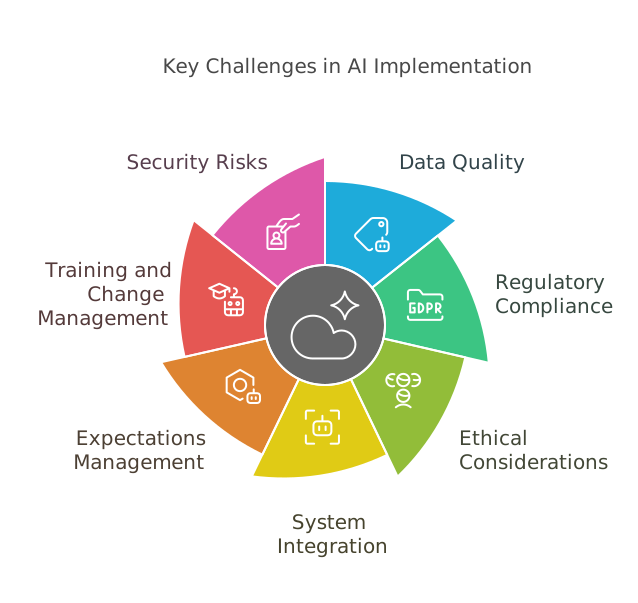
1. Inadequate Data Quality and Availability
The quality of AI agents depends on the quality of the data they are trained on. Inaccurate forecasts and poor decision-making result from data that is of poor quality, lacking, or biased. Insurance data often comes from multiple sources, including legacy systems, external databases, and real-time inputs. If these sources are not properly managed, data silos and inconsistencies will affect the AI agent's performance.
2. Lack of Regulatory Compliance
The insurance industry is heavily regulated, and AI applications must comply with standards like GDPR, CCPA, and insurance-specific regulations. Failure to adhere to these rules can result in hefty fines and reputational damage. Regulatory bodies expect insurers to demonstrate how AI models make decisions, especially when those decisions impact pricing or claims outcomes.
3. Overlooking Ethical Considerations
AI agents can inadvertently perpetuate biases present in training data, leading to unfair outcomes for certain customer segments. Ethical considerations go beyond legal compliance. They involve ensuring fairness, transparency, and accountability. If biases remain unchecked, specific demographic groups might face higher premiums or increased claim rejections.
4. Poor Integration with Existing Systems
Insurance companies often rely on legacy systems that are not easily compatible with modern AI solutions. Inadequate integration leads to operational disruptions and inefficient workflows. Many legacy systems lack the necessary infrastructure to support real-time data processing, creating bottlenecks in AI agent operations. A well-planned integration strategy helps minimize disruptions.
5. Unrealistic Expectations and ROI Misjudgments
AI is powerful but not a magic bullet. Expecting immediate and transformative results without a clear roadmap leads to disillusionment. AI projects often require significant time for data collection, model training, testing, and deployment. Misjudging the time and resources needed leads to poor decision-making and wasted investments.
6. Insufficient Training and Change Management
AI adoption requires a shift in organizational culture and skills. Neglecting staff training leads to resistance and suboptimal use of AI agents. Employees need to understand how AI tools work and how they impact daily tasks. Change management strategies should focus on fostering collaboration between data scientists, business leaders, and frontline staff.
7. Security Vulnerabilities and Data Privacy Risks
AI agents handle sensitive customer information, making them attractive targets for cyberattacks. Data breaches erode customer trust and result in regulatory penalties. Cybersecurity measures must be integrated into AI systems from the outset, addressing potential vulnerabilities such as unauthorized access, data leaks, and malicious algorithm manipulation.
What Is the Step-by-Step Process for Implementing AI Agents in Insurance?
Implementing AI agents in insurance requires a structured approach to ensure successful integration, efficiency gains, and measurable business impact. Below are the key steps that carriers, MGAs, and brokerages should follow.
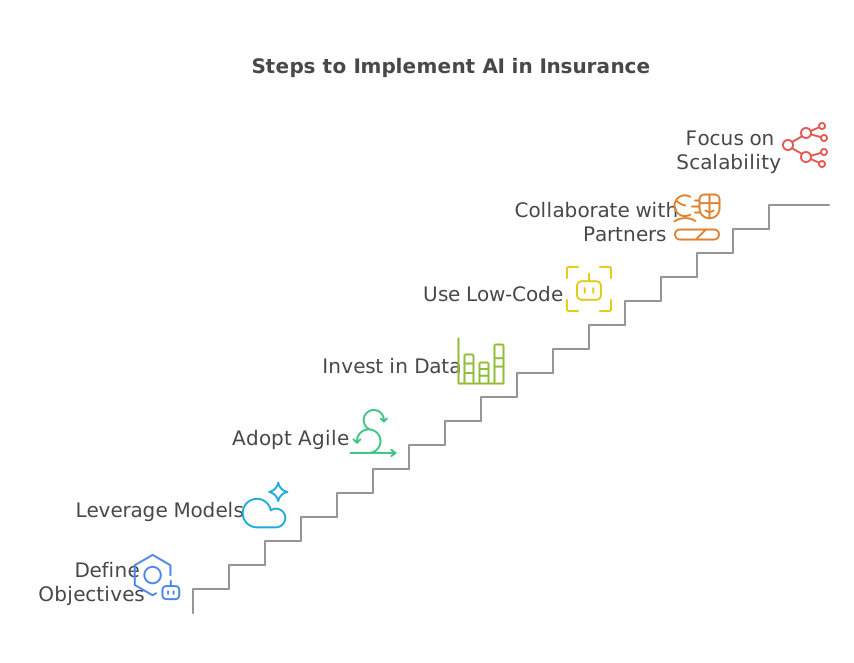
1. Define Clear Objectives and Use Cases Early
The first step in accelerating AI agent implementation is to define clear objectives and identify specific use cases that benefit most from AI capabilities. Without a well-defined strategy, projects become unfocused, leading to delays and resource wastage. Establishing measurable goals, such as reducing claims processing time by 30%, helps align efforts and track progress.
2. Leverage Pre-Trained Models and AI Platforms
Developing AI models from scratch is time-consuming and resource-intensive. By leveraging pre-trained models and industry-specific AI platforms, companies can significantly cut development time. These models, often trained on large datasets, provide a strong foundation for applications like risk assessment and customer service. Cloud-based AI platforms offer ready-to-use infrastructure, enabling teams to deploy models quickly.
3. Adopt Agile Methodologies
Traditional project management approaches can slow down AI implementation due to rigid structures. Agile methodologies promote flexibility, collaboration, and continuous improvement. By breaking down the project into smaller, manageable sprints, teams can test AI agents in real-world scenarios, gather feedback, and make adjustments rapidly.
4. Invest in Data Infrastructure and Quality
Data is the lifeblood of AI agents in insurance. Poor data quality severely hampers their performance. Building a robust data infrastructure involves collecting and storing vast amounts of data while ensuring its accuracy, consistency, and accessibility. Insurance companies should implement automated data pipelines for real-time data ingestion and cleansing. Adopting data governance frameworks helps maintain compliance with regulatory requirements.
5. Use Low-Code and No-Code AI Solutions
Low-code and no-code AI platforms democratize AI development by allowing non-technical users to create and deploy AI agents with minimal coding knowledge. These tools come with intuitive interfaces, pre-built algorithms, and drag-and-drop functionalities that accelerate the development process. Customer service teams can quickly set up AI chatbots to handle routine inquiries, reducing dependency on IT resources.
6. Collaborate with Experienced AI Partners
Partnering with external AI experts, vendors, or specialized firms like Digiqt provides valuable insights and resources for faster implementation. These partners bring experience from similar projects, enabling insurance companies to avoid common pitfalls and adopt best practices. Collaboration also grants access to advanced tools, frameworks, and pre-trained models that might otherwise take months to develop in-house.
7. Focus on Scalable Architecture
Scalability is a critical factor when implementing AI agents across different functions and geographic locations. Cloud-native architectures provide the necessary scalability to handle increasing workloads without significant infrastructure investments. By adopting microservices architectures, insurers develop modular AI applications that can be independently updated and scaled.
What Are the Types of AI Agent Architectures for Insurance?
AI agents in the insurance industry rely on various architectures to perform tasks like claims processing, underwriting, customer support, and fraud detection. Understanding these architectures helps insurers choose the right framework for their needs.
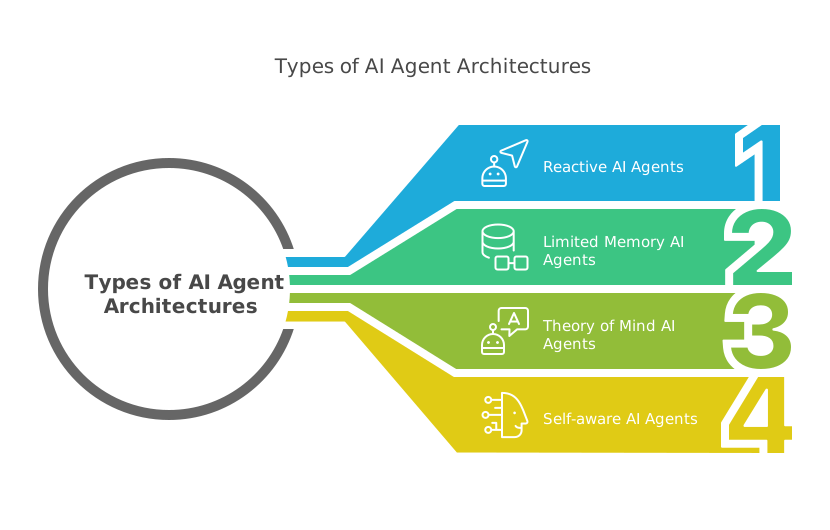
1. Reactive AI Agents
Reactive AI agents operate based on predefined rules and patterns without the ability to learn from past experiences. They function similarly to rule-based systems, responding to specific inputs with pre-established actions. They are useful for straightforward tasks like answering FAQs, processing routine claims, and handling repetitive customer interactions. However, these agents struggle with unfamiliar scenarios as they cannot adapt based on new data.
2. Limited Memory AI Agents
Limited memory AI agents learn from historical data to improve their performance over time. These agents are often used for risk assessment, dynamic pricing, and claims processing. They analyze past claims data to identify patterns that indicate potential fraud or predict future claim volumes. The effectiveness of these agents depends on the quality and diversity of the historical data available.
3. Theory of Mind AI Agents
Theory of Mind AI agents are designed to understand and predict human behavior by interpreting emotions, intentions, and beliefs. In the insurance sector, they hold promise for improving customer service interactions by tailoring responses based on perceived customer emotions and preferences. Although still in development, potential applications include personalized policy recommendations, empathetic claim assistance, and proactive customer engagement.
4. Self-Aware AI Agents
Self-aware AI agents represent the most advanced stage of AI development. These agents possess a form of self-consciousness and the ability to understand their own internal state as well as external environments. In theory, such agents could revolutionize insurance by offering hyper-personalized services, conducting complex risk analyses, and autonomously optimizing operations. However, self-aware AI remains largely theoretical, with significant ethical, technical, and regulatory hurdles to overcome.
How Can Insurers Mitigate Compliance Risks with AI Agents?
Regulatory compliance is non-negotiable in insurance AI deployments. Carriers must build compliance into the AI system architecture from day one rather than retrofitting it after deployment.
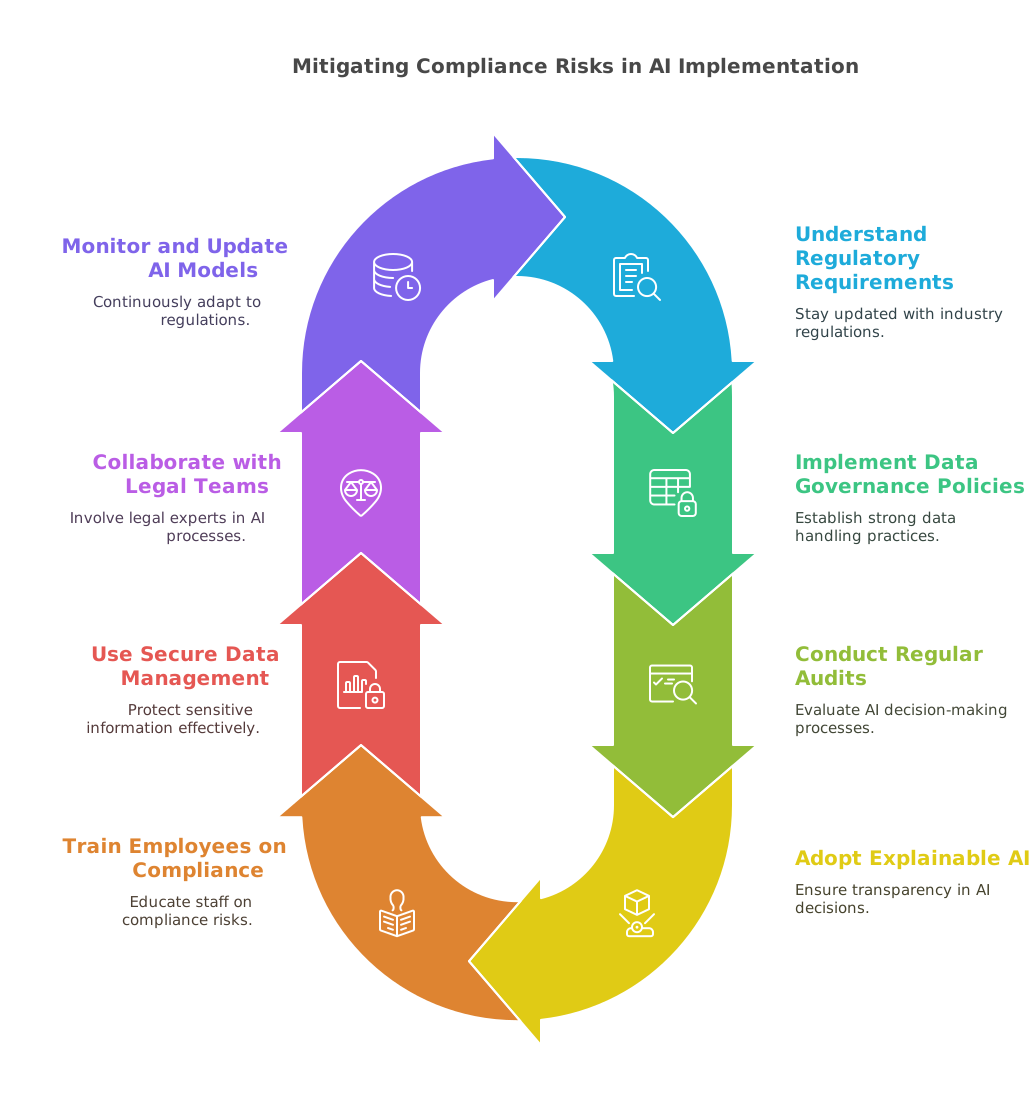
1. Understand Regulatory Requirements
Stay updated with industry regulations such as GDPR, CCPA, and specific insurance-related compliance requirements. Regularly review changes in laws to ensure AI systems adhere to the latest standards.
2. Implement Data Governance Policies
Establish strong data governance practices, including protocols for data collection, storage, and usage. Ensure that personally identifiable information (PII) is handled in accordance with legal requirements.
3. Conduct Regular Audits
Schedule periodic audits to evaluate the AI agents' decision-making processes and data usage. Independent audits uncover potential compliance gaps early.
4. Adopt Explainable AI (XAI)
Utilize explainable AI techniques to make AI-driven decisions more transparent. Transparent systems help regulatory bodies and stakeholders understand and trust AI operations.
5. Train Employees on Compliance
Educate employees about compliance risks and procedures. Conduct training sessions to ensure all team members understand how to work with AI tools responsibly.
6. Use Secure Data Management Systems
Employ encryption, anonymization, and access control measures to protect sensitive information. Data breaches cause compliance issues and damage customer trust.
7. Collaborate with Legal and Compliance Teams
Involve legal and compliance professionals throughout the AI implementation process. Their expertise guides model development and deployment to avoid regulatory pitfalls.
8. Monitor and Update AI Models
Regularly update AI models to adapt to new regulations and evolving risks. Continuous monitoring helps detect unusual patterns that might indicate compliance issues.
How Should Insurers Launch an AI Agent Strategy?
Implementing AI agents in insurance requires a structured approach to ensure successful integration, efficiency gains, and measurable business impact. AI agents can enhance customer engagement, automate claims processing, improve underwriting, and detect fraud. To unlock their full potential, insurers must follow a strategic roadmap.
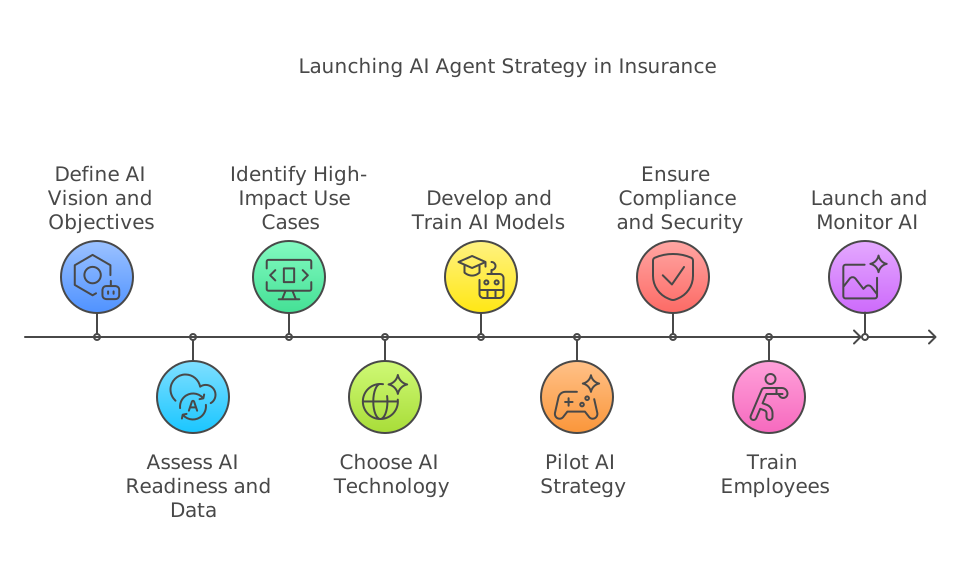
1. Define Your AI Vision and Business Objectives
Before implementing AI agents, insurers must clearly define what they aim to achieve. Without clear objectives, AI adoption leads to inefficiencies and wasted resources. Key questions to consider include: What are the biggest pain points in your current operations? Are you looking to automate claims processing, customer support, or fraud detection? How will AI help reduce operational costs and enhance customer experience?
2. Assess AI Readiness and Data Infrastructure
AI agents rely on high-quality data to function efficiently. Before launching AI, insurers must evaluate whether their data infrastructure, IT systems, and workforce are AI-ready. Assess data quality and availability, legacy system compatibility, compliance and security measures, and whether the team has the necessary AI expertise or requires an external partner.
3. Identify High-Impact Use Cases for AI Agents
AI agents can enhance multiple areas of insurance operations. Insurers should prioritize use cases based on their impact, feasibility, and return on investment. Top use cases include AI-powered customer support, automated claims processing, underwriting and risk assessment, fraud detection, and AI-driven sales and marketing.
4. Choose the Right AI Technology and Implementation Approach
Insurers must decide whether to build AI solutions in-house, use third-party AI vendors, or adopt a hybrid approach. Key considerations include build versus buy decisions, on-premise versus cloud-based AI, and AI explainability and compliance requirements.
5. Develop and Train AI Models with High-Quality Data
AI agents require continuous training on historical claims, underwriting policies, fraud patterns, and customer interactions to make intelligent decisions. Best practices include using diverse datasets to reduce bias, continuously testing AI predictions with real-world scenarios, and refining AI decision-making with human feedback loops.
6. Pilot the AI Agent Strategy in a Controlled Environment
A pilot program helps insurers test AI performance on a small scale before full deployment. Select a specific business function for AI deployment, monitor AI agent accuracy and customer satisfaction, and collect feedback from employees and policyholders to refine AI models.
7. Ensure Regulatory Compliance and AI Security
AI in insurance must comply with data privacy laws and industry regulations to maintain trust and legal integrity. Key compliance considerations include AI transparency, data privacy and cybersecurity, and bias and fairness audits.
8. Train Employees and Foster AI Adoption
AI should enhance human expertise, not replace it. Employees must be trained to collaborate with AI systems effectively. Educate teams on AI-driven underwriting, claims, and customer service workflows. Provide hands-on training for AI-powered dashboards and fraud detection tools.
9. Launch AI Agents and Monitor Performance Continuously
Once AI agents are fully deployed, insurers must track performance, refine models, and ensure continuous optimization. Track KPIs like claim settlement time, customer satisfaction scores, and fraud detection rates. Implement human oversight for critical AI decisions to maintain accountability.
10. Scale AI Across the Insurance Ecosystem
After successful implementation, insurers can expand AI to multiple departments and advanced applications. Expand AI chatbots from customer service to claims processing and underwriting. Use AI for predictive analytics in risk assessment and fraud detection. Automate AI-powered policy renewals and personalized customer engagement.
What Should Insurers Do After Implementing AI Agents?
Successfully implementing AI agents in insurance is just the beginning. To maximize efficiency, enhance customer experience, and ensure long-term success, insurers must focus on continuous improvement, monitoring, compliance, and expansion.
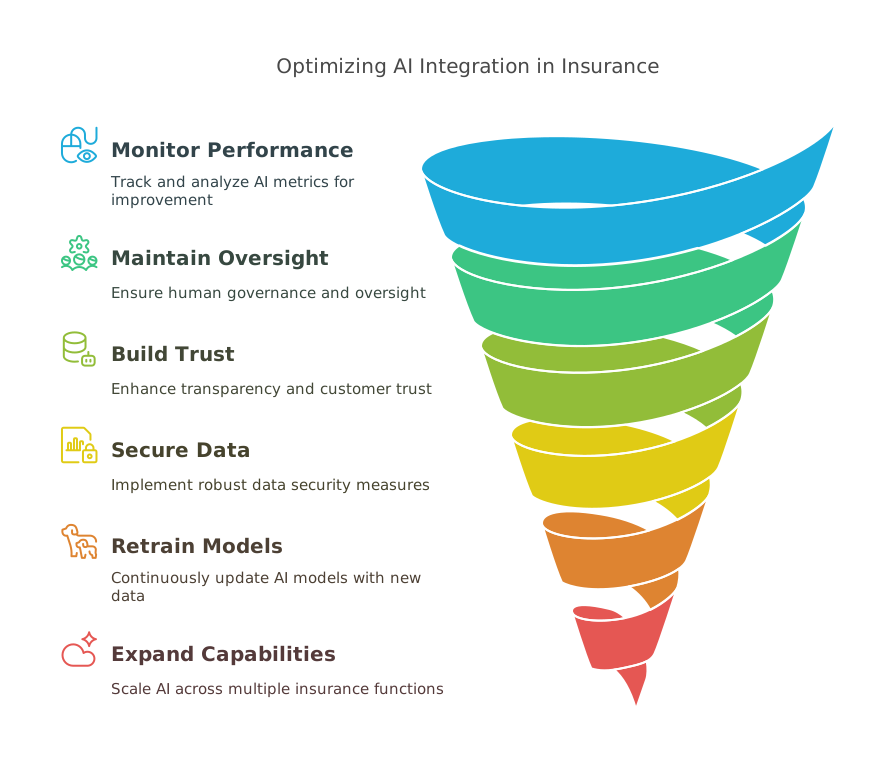
1. Monitor AI Agent Performance and Optimize Continuously
Once AI agents are live, tracking performance metrics is critical to identify strengths, weaknesses, and areas for improvement. AI models must be regularly updated to adapt to evolving customer needs, fraud tactics, and regulatory requirements. Insurers should monitor KPIs such as claim processing time, fraud detection accuracy, customer satisfaction levels, underwriting precision, and operational cost savings.
2. Maintain Human Oversight and AI Governance
AI agents should not operate in isolation. Human oversight is essential to ensure AI-driven decisions are fair, accurate, and aligned with business objectives. Insurers should establish AI governance frameworks that provide transparency and accountability. Human-in-the-loop mechanisms should be implemented so that AI-generated decisions undergo manual review when necessary.
3. Address Customer Trust and AI Transparency
While AI agents enhance efficiency, some customers may be skeptical about AI-driven decisions. Insurers must ensure AI interactions are transparent, reliable, and human-like to build trust. If an AI system denies a claim, customers should receive a clear explanation along with an option to appeal through human representatives.
4. Strengthen Data Security and Compliance
AI agents handle vast amounts of sensitive customer data, making security and compliance a top priority. AI systems should be regularly audited for data privacy, cybersecurity, and regulatory compliance with frameworks such as GDPR, HIPAA, and state insurance laws. Advanced security measures like encryption, access control, and real-time fraud monitoring should be implemented.
5. Retrain AI Models with New Data and Evolving Market Trends
AI agents require continuous learning and updates to stay relevant. If AI systems rely on outdated data, they may produce inaccurate risk assessments, fail to detect new fraud patterns, or struggle with evolving customer behaviors. Insurers must frequently retrain AI agents using real-world data, industry trends, and regulatory changes.
6. Expand AI Capabilities Across Multiple Insurance Functions
After successful AI implementation in one area, insurers should scale AI agents across other departments to maximize ROI. If an AI chatbot successfully handles customer inquiries, it can be expanded to assist in policy renewals, claims filing, and fraud detection. AI-driven fraud prevention models can be integrated with underwriting to improve risk assessment. Learn how carriers are scaling AI agents in reinsurance to extend these benefits across their entire portfolio.
7. Train Employees to Work Alongside AI Agents
While AI agents enhance automation, employees must understand how to use AI effectively. Training staff on AI tools ensures that human agents can interpret AI-generated insights, manage AI interactions, and intervene in complex cases. Encouraging a hybrid AI-human workflow helps employees leverage AI insights while applying their expertise to critical decision-making.
8. Evaluate ROI and AI's Impact on Business Growth
Insurance companies must regularly measure the impact of AI agents on business performance. AI implementation is an investment, and insurers should assess whether AI is delivering measurable ROI in terms of cost savings, efficiency improvements, and customer satisfaction.
| ROI Metric | Before AI Agents | After AI Agents |
|---|---|---|
| Average claims settlement | 14-21 days | 24-48 hours |
| Fraud detection accuracy | 55-65% | 90-95% |
| Customer service resolution | 72-hour response | Instant AI response |
| Underwriting turnaround | 5-7 business days | Under 4 hours |
| Operational cost per policy | $120-$180 | $45-$75 |
| Policy renewal rate | 72-78% | 88-93% |
What Is the Business ROI of Implementing AI Agents in Insurance?
AI agents deliver quantifiable returns across every major insurance function. Carriers that measure ROI systematically can justify expanded AI investment and accelerate deployment across their organizations.
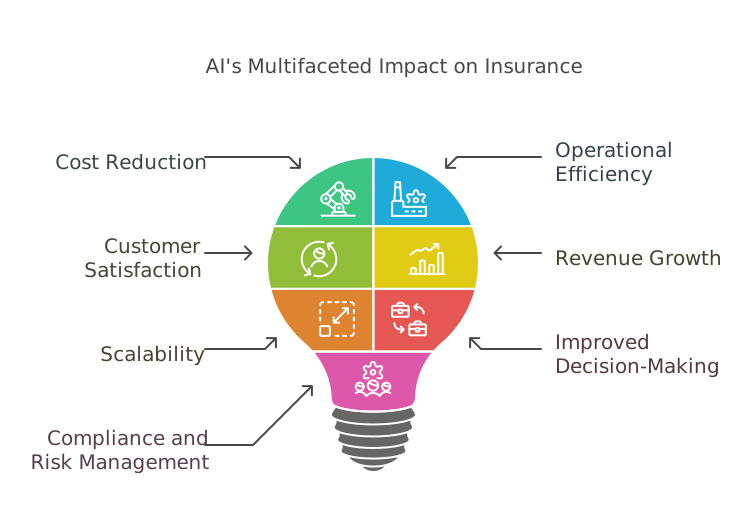
1. Cost Reduction
AI agents significantly reduce operational costs by automating routine, labor-intensive tasks such as claims processing, policy issuance, and customer support. With AI agents handling these processes, insurers cut down on manual efforts, reduce error rates, and streamline workflows. Studies suggest that insurers can achieve operational cost savings of up to 30% through AI-driven automation, reallocating resources toward higher-value initiatives.
2. Operational Efficiency
AI agents enhance operational efficiency by simplifying and accelerating complex processes. Tasks like underwriting, fraud detection, and claims assessment can be completed much faster with AI. Machine learning algorithms analyze vast datasets more accurately than human analysts, ensuring better decision-making and reducing turnaround times. This increased efficiency allows insurers to handle larger volumes without compromising quality.
3. Customer Satisfaction
Customer experience is a critical differentiator in the competitive insurance market. AI agents significantly improve customer satisfaction by offering personalized, responsive, and efficient service experiences. Chatbots and virtual assistants provide 24/7 support. AI-driven personalization ensures customers receive tailored policy recommendations. Insurers that prioritize customer-centric AI often report higher Net Promoter Scores (NPS) and increased policy renewals.
4. Revenue Growth
Implementing AI agents contributes to revenue growth by unlocking new business opportunities. Predictive analytics capabilities allow insurers to identify new customer segments, understand emerging trends, and develop targeted products. AI agents identify cross-selling and upselling opportunities by analyzing customer data, increasing the average revenue per policyholder.
5. Scalability
AI agents provide a scalable solution for insurers looking to grow without proportional increases in operational costs. Unlike human employees, AI agents handle significantly larger workloads without performance degradation. During peak periods like natural disasters or policy renewal seasons, AI systems process thousands of claims or policy requests simultaneously. Cloud-based AI agents further enhance scalability by providing flexible computing resources.
6. Improved Decision-Making
AI agents improve decision-making across various functions, from underwriting to claims management. Advanced machine learning models analyze historical data to predict future trends, helping insurers make informed strategic decisions. In risk management, predictive models identify high-risk profiles with greater accuracy than traditional methods.
7. Compliance and Risk Management
Compliance with regulatory requirements is crucial in insurance, and AI agents play a vital role in ensuring adherence to evolving standards. AI agents monitor transactions, customer interactions, and documentation for compliance with regulations like GDPR, CCPA, and insurance-specific guidelines. Automated checks and alerts identify potential violations early, reducing the risk of legal penalties and reputational damage. AI-driven fraud detection tools flag suspicious claims by analyzing patterns indicative of fraudulent behavior.
Which Insurance Roles Are Most Impacted by AI Agents?
AI agents are reshaping workforce requirements across the insurance industry. Understanding which roles face the greatest transformation helps carriers plan reskilling programs and optimize their human-AI workforce balance.
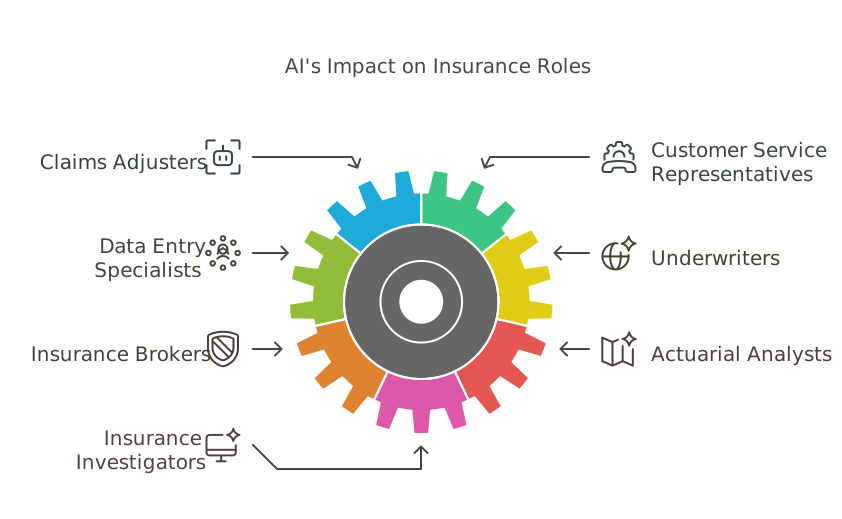
1. Claims Adjusters
AI-powered tools automatically analyze claims, assess damages, verify policy details, and approve straightforward claims without human intervention. Traditional claims adjusters handling low-complexity claims may see reduced demand. Human adjusters will still be required for complex claims involving disputes or significant damages, but their roles will evolve toward overseeing AI systems and handling exceptional cases.
2. Customer Service Representatives
AI chatbots and virtual assistants provide instant, accurate responses to customer inquiries. Routine tasks like policy inquiries, payment processing, and claims status updates are now handled by AI agents. Customer service personnel will shift toward more complex, empathetic interactions requiring human judgment, particularly in cases involving sensitive or emotional topics.
3. Data Entry Specialists
OCR and NLP technologies enable AI agents to extract, validate, and input data from documents automatically. Data entry roles are at high risk of automation, as AI systems process vast amounts of data faster and with greater accuracy. Specialists who upskill in data governance, quality control, and AI model monitoring can remain relevant.
4. Underwriters (Entry-Level Positions)
AI-driven underwriting platforms analyze customer data, past claims, and market trends to assess risk more efficiently. Entry-level underwriting roles involving routine data analysis and rule-based decisions are increasingly automated. Senior underwriters will remain essential for complex cases and for overseeing AI models for bias, accuracy, and compliance.
5. Insurance Brokers (Transactional Roles)
Self-service platforms powered by AI enable customers to compare policies, receive personalized recommendations, and purchase insurance without human assistance. Brokers involved in simple transactional sales are seeing diminished demand. Brokers focusing on personalized, consultative services for complex insurance needs will remain valuable.
6. Actuarial Analysts (Routine Tasks)
AI algorithms analyze historical data, predict future trends, and model risk scenarios with greater speed and precision. Junior actuarial roles focusing on routine calculations and standard reporting face automation threats. Actuaries who specialize in designing AI models, interpreting results, and applying strategic insights will remain in demand.
7. Insurance Investigators (Basic Investigations)
AI-driven fraud detection systems use pattern recognition and anomaly detection to identify potentially fraudulent claims. Investigators handling straightforward, rule-based cases are more likely to be displaced. Investigators will need to focus on complex, high-stakes fraud cases requiring human judgment and investigative skills.
How Can Enterprises and Startups Get the Best Results from AI Agents?
Startups and enterprises face different challenges when deploying AI agents, but both can achieve significant competitive advantages with the right approach. Startups benefit from lean, AI-first operations, while enterprises gain from scaling automation across existing infrastructure.
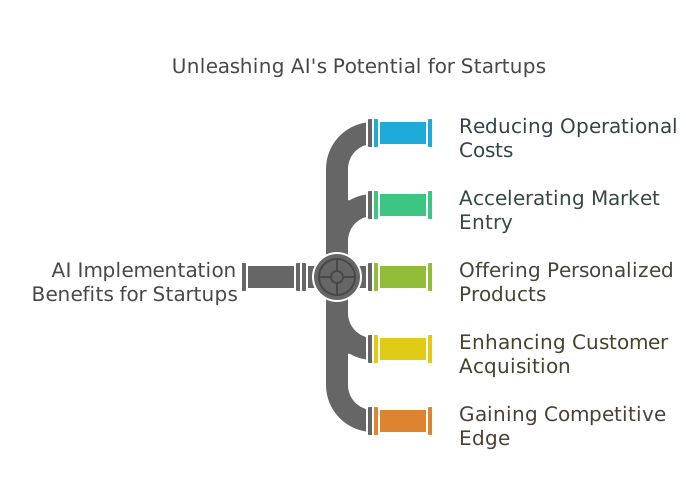
1. Reducing Operational Costs for Lean Growth
Unlike large enterprises, startups often operate on tight budgets and cannot afford large customer support teams or back-office staff. AI-driven automation helps them reduce costs while maintaining efficiency. AI-powered chatbots handle customer inquiries, claims processing, and policy renewals, significantly reducing the need for human intervention. Automating policy underwriting and claims assessment reduces labor costs while ensuring faster service delivery.
2. Accelerating Market Entry with AI-Powered Tools
Startups need to launch quickly and efficiently to stay competitive. AI accelerates this process by eliminating the need for extensive infrastructure and human resources. AI-powered cloud-based platforms enable startups to scale operations instantly. Startups can leverage pre-trained AI models for fraud detection, risk assessment, and customer insights, eliminating the need for extensive in-house development.
3. Offering Personalized and Digital-First Insurance Products
AI enables startups to create highly customized insurance products that cater to specific market needs. AI algorithms analyze customer behavior, purchase history, and risk profiles to create tailored insurance packages. Usage-Based Insurance (UBI) models, such as pay-per-mile auto insurance or behavior-based health insurance, are made possible through AI-driven real-time data collection.
4. Enhancing Customer Acquisition and Retention
For startups, acquiring and retaining customers is crucial for long-term success. AI provides advanced tools to attract, engage, and retain policyholders. AI-driven digital marketing tools analyze customer data and optimize advertising campaigns. AI chatbots act as virtual insurance advisors, guiding potential customers through policy selection and renewal processes.
5. Gaining Competitive Edge with Data-Driven Decision Making
Startups need to differentiate themselves from traditional insurers. AI-powered analytics help them make smarter business decisions. AI algorithms assess industry trends, risk factors, and competitor pricing to help startups refine strategies. Real-time AI insights allow startups to pivot quickly, responding to market changes faster than traditional insurers.
What Are Real-World Case Studies of AI Agents in Insurance?
The following case studies demonstrate how leading insurers across the globe have deployed AI agents to achieve measurable improvements in claims processing, fraud detection, customer service, and underwriting.
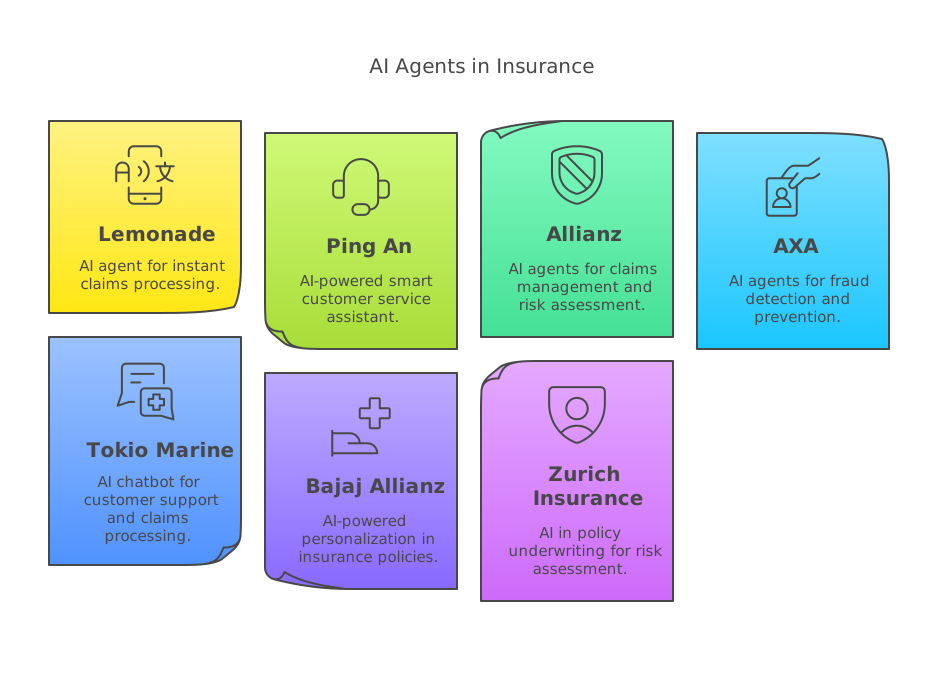
1. Lemonade (USA): AI-Powered Instant Claims Processing
Challenge: Traditional insurance companies struggled with lengthy claims processing times requiring human intervention at multiple stages. Lemonade aimed to eliminate bureaucracy, speed up claims handling, and reduce fraud.
AI Agent Implementation: Lemonade introduced an AI agent called "Jim" that instantly processes claims without human intervention. The AI agent verifies customer information, analyzes claim details, and approves legitimate claims within seconds. AI-powered fraud detection models analyze data patterns and flag suspicious claims for manual review.
Results: 30% of claims are processed instantly, reducing settlement time from days to minutes. Customer acquisition costs lowered as AI-driven automation required fewer employees. Increased customer satisfaction from fast, hassle-free claim approvals.
2. Ping An Insurance (China): AI-Powered Smart Customer Service
Challenge: Ping An faced challenges handling millions of customer inquiries and processing claims efficiently. A growing number of policyholders demanded faster responses and personalized services.
AI Agent Implementation: Ping An deployed an AI-powered virtual assistant called "AskBob" that provides real-time responses to customer inquiries. The AI agent helps with policy purchases, claims submissions, and fraud detection using NLP and machine learning. AI-driven facial recognition technology verifies identities and speeds up the claims process.
Results: Over 90% of customer inquiries are handled by AI agents, reducing call center workload. Claims processing time reduced by 50%. Fraud detection improved as AI cross-references claims with real-time data.
3. Allianz (Germany): AI in Claims Management and Risk Assessment
Challenge: Allianz faced inefficiencies in claims assessment and risk evaluation. Manual claims verification was slow, and risk assessment relied heavily on traditional actuarial models.
AI Agent Implementation: Allianz implemented AI agents that automate claims assessment, verifying documents and identifying discrepancies in claim reports. AI models analyze thousands of claims in real time. AI-powered risk assessment tools predict potential fraudulent claims.
Results: Claims approval speed increased by 60%. Fraudulent claim detection improved, leading to millions in cost savings. Operational efficiency enhanced as AI handled repetitive tasks.
4. AXA (France): AI Agents in Fraud Detection and Prevention
Challenge: AXA faced a growing problem of insurance fraud, with criminals using fake documents and identity theft to submit fraudulent claims. Traditional fraud detection methods were reactive and slow.
AI Agent Implementation: AXA integrated AI-powered fraud detection agents that analyze claims, transactions, and customer behavior in real time. AI uses computer vision to scan documents and images for inconsistencies. NLP algorithms identify suspicious language patterns in claim descriptions.
Results: 35% improvement in fraud detection, reducing financial losses. Faster fraud identification, preventing payouts before they happen. Claims processing time improved as legitimate claims were approved quicker.
5. Tokio Marine (Japan): AI in Customer Support and Claims Processing
Challenge: Tokio Marine wanted to improve customer service response times and enhance claims efficiency without significantly increasing costs.
AI Agent Implementation: The company launched an AI-powered chatbot handling policy queries, renewals, and claims tracking. AI agents assist human agents by pre-screening claims and providing recommendations. Speech recognition technology analyzes customer voice interactions to assess sentiment and detect frustration levels.
Results: 90% of customer queries handled by AI chatbots, reducing call center burden. Customer complaints about response times reduced by 50%. Claims assessment process accelerated, leading to improved efficiency.
6. Bajaj Allianz (India): AI-Powered Personalization in Insurance
Challenge: Bajaj Allianz wanted to offer personalized insurance plans based on customer lifestyle, driving behavior, and medical history. Traditional risk assessment models were generic and lacked customization.
AI Agent Implementation: AI-powered analytics evaluate customer behavior, health records, and driving patterns to create tailor-made insurance policies. AI chatbots assist in policy selection, providing custom recommendations. AI agents integrate with mobile apps to offer real-time policy updates and claims tracking.
Results: Personalized policies increased customer engagement by 20%. Higher conversion rates as AI-driven recommendations matched customer needs. Claims processing became faster as AI pre-verified data for approval.
7. Zurich Insurance (Switzerland): AI in Policy Underwriting
Challenge: Zurich Insurance faced difficulties in assessing risk profiles quickly and accurately. Manual underwriting processes were time-consuming and prone to errors.
AI Agent Implementation: AI-driven underwriting models analyze past claims, customer credit scores, and external data sources to assess risk profiles instantly. The AI agent categorizes applicants based on real-time risk assessment. Zurich uses AI-powered predictive analytics to refine pricing models and offer competitive premiums.
Results: Underwriting time reduced by 75%, improving policy approval speeds. More accurate risk profiling, reducing losses from underpriced policies. Increased operational efficiency as AI handles routine underwriting tasks.
How Does Digiqt Deliver Results?
Digiqt follows a proven delivery methodology to ensure measurable outcomes for every engagement.
1. Discovery and Requirements
Digiqt starts with a detailed assessment of your current operations, technology stack, and business objectives. This phase identifies the highest-impact opportunities and establishes baseline KPIs for measuring success.
2. Solution Design
Based on the discovery findings, Digiqt architects a solution tailored to your specific workflows and integration requirements. Every design decision is documented and reviewed with your team before development begins.
3. Iterative Build and Testing
Digiqt builds in focused sprints, delivering working functionality every two weeks. Each sprint includes rigorous testing, stakeholder review, and refinement based on real feedback from your team.
4. Deployment and Ongoing Optimization
After thorough QA and UAT, Digiqt deploys the solution with monitoring dashboards and performance tracking. The team continues optimizing based on production data and evolving business requirements.
Ready to discuss your requirements?
Why Should Insurance Carriers Choose Digiqt for AI Agent Development?
Digiqt specializes in building production-ready AI agent systems for insurance carriers, MGAs, and brokerages. Unlike generic AI vendors that offer one-size-fits-all solutions, Digiqt delivers insurance-specific AI architectures designed for the regulatory, operational, and data complexity that insurance organizations face daily.
1. Insurance-Native AI Models
Digiqt's AI agents are trained on insurance-specific datasets and workflows. Every model understands the nuances of claims adjudication, underwriting risk factors, regulatory compliance requirements, and policyholder communication patterns. This domain expertise translates to faster deployment, higher accuracy, and fewer false positives compared to generic AI platforms.
2. Compliance-First Architecture
Every AI agent Digiqt builds includes explainability layers, audit trails, and data governance protocols that meet GDPR, HIPAA, CCPA, and state insurance department requirements. Carriers never have to choose between AI efficiency and regulatory compliance.
3. Proven Carrier Deployments
Digiqt has delivered AI agent solutions for property and casualty carriers, life insurance companies, and specialty MGAs. Each deployment follows a structured pilot-to-scale methodology that minimizes risk and maximizes measurable ROI within the first quarter.
4. End-to-End Partnership
From initial use case identification through production deployment and ongoing model optimization, Digiqt provides a complete partnership. Carriers get a dedicated team of AI engineers, insurance domain experts, and integration specialists who understand both the technology and the business.
Ready to deploy AI agents that actually work for insurance? Digiqt has the models, the methodology, and the insurance expertise to make it happen.
Visit Digiqt to explore our insurance AI agent solutions.
Will Insurers Who Delay AI Agent Adoption Survive Beyond 2027?
The competitive window for AI adoption in insurance is closing rapidly. Carriers that deploy AI agents today are building compounding advantages in operational efficiency, customer experience, and fraud prevention that late adopters will find nearly impossible to overcome.
Every month of delay means more claims processed manually at higher cost, more fraud slipping through undetected, more customers churning to AI-powered competitors offering instant service, and more underwriting errors eroding profitability.
The insurance carriers, MGAs, and brokerages that will lead the industry through 2026 and beyond are the ones making AI agent deployment decisions right now. The technology is proven. The ROI is documented. The only remaining variable is execution speed.
Do not let your competitors define the future of your insurance operations. Talk to Digiqt today about deploying AI agents that deliver measurable results in 90 days.
Visit Digiqt to start your AI agent journey.
Frequently Asked Questions
What are AI agents in insurance?
AI agents are autonomous software systems that automate claims, underwriting, fraud detection, and customer service using machine learning and NLP.
How do AI agents reduce insurance claims processing time?
AI agents validate documents, cross-check databases, and approve straightforward claims in minutes instead of weeks.
What is the ROI of AI agents for insurance carriers?
Insurance carriers typically achieve 30% operational cost savings and 60% faster claims approval with AI agents.
Can AI agents detect insurance fraud effectively?
Yes, AI agents analyze behavioral patterns and flag anomalies, improving fraud detection rates by up to 35%.
How do AI agents improve insurance underwriting accuracy?
AI agents assess real-time data from multiple sources to build holistic risk profiles, reducing underwriting time by 75%.
Are AI agents compliant with insurance regulations like GDPR?
Yes, properly configured AI agents include explainability, audit trails, and data governance to meet GDPR and HIPAA requirements.
How long does it take to implement AI agents in an insurance company?
A pilot deployment typically takes 8 to 12 weeks, with full-scale rollout completed within 6 months.
Why should insurance companies partner with Digiqt for AI agents?
Digiqt delivers production-ready AI agent solutions with insurance-specific models, compliance frameworks, and proven carrier deployments.