AI Agents in Finance: 7 Use Cases Driving ROI (2026)
How AI Agents Are Transforming Finance Operations in 2026
The financial industry is undergoing a fundamental shift. AI agents in finance are no longer experimental pilots. They are production systems running inside the world's largest banks, asset management firms, and fintech platforms. These autonomous software agents use machine learning, natural language processing, and real-time data pipelines to execute tasks that once required entire departments of analysts, compliance officers, and operations staff.
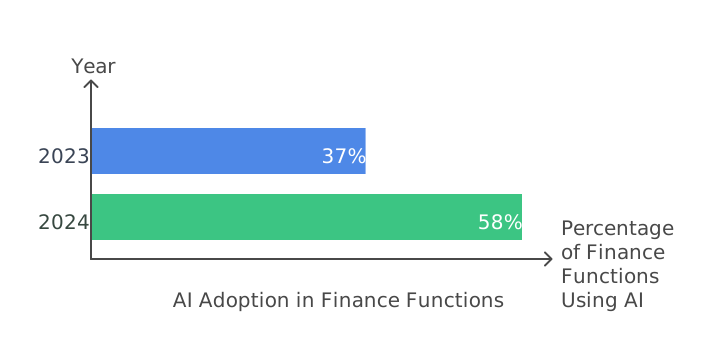
A Gartner survey of 121 finance leaders found that 58% of finance functions had deployed AI agents by late 2024, a 21-percentage-point jump from 2023. Of the remaining 42%, half planned to implement AI-driven financial solutions within two years, signaling near-universal adoption across the sector. (Source)
By 2026, financial institutions that have not deployed AI agents face a widening gap in speed, accuracy, and cost efficiency against competitors that have. This guide breaks down the use cases, implementation strategies, and real-world results that matter for banks, asset managers, and fintechs evaluating AI agent deployment today.
Why Are Financial Firms Falling Behind Without AI Agents?
Financial firms that delay AI agent adoption face compounding disadvantages: rising compliance costs, slower loan processing, higher fraud losses, and customer attrition to AI-native fintechs.
The cost of inaction is no longer theoretical. Legacy manual processes are creating measurable gaps:
1. Compliance Costs Are Escalating
Regulatory requirements grow more complex every year. Institutions relying on manual compliance checks spend 3 to 5x more per audit cycle than those using AI-driven compliance automation. Fines for AML and KYC violations exceeded $5 billion globally in recent years, and regulators are tightening enforcement further in 2026.
2. Manual Lending Decisions Are Too Slow
Traditional loan underwriting takes days. Fintechs powered by AI agents in digital lending approve loans in minutes. Banks that cannot match this speed lose borrowers to faster competitors.
3. Fraud Detection Gaps Widen
Legacy rule-based fraud systems generate excessive false positives while missing sophisticated attack patterns. AI agents using ML-based anomaly detection reduce false positives by 50 to 70% while catching more actual fraud.
| Without AI Agents | With AI Agents |
|---|---|
| 3 to 5 day loan approvals | Minutes to hours |
| 60%+ false positive fraud alerts | Under 20% false positive rate |
| $2M+ annual compliance labor costs | 40 to 60% cost reduction |
| Static credit scoring models | Dynamic, multi-variable risk models |
| Reactive regulatory reporting | Real-time compliance monitoring |
What Are the Core Use Cases of AI Agents in Finance?
AI agents in finance serve 12 distinct operational functions across financial institutions, from front-office customer engagement to back-office reconciliation and regulatory reporting.
The financial industry benefits from AI agents across every department. Here are the use cases that deliver the highest ROI for banks, asset managers, and fintechs.
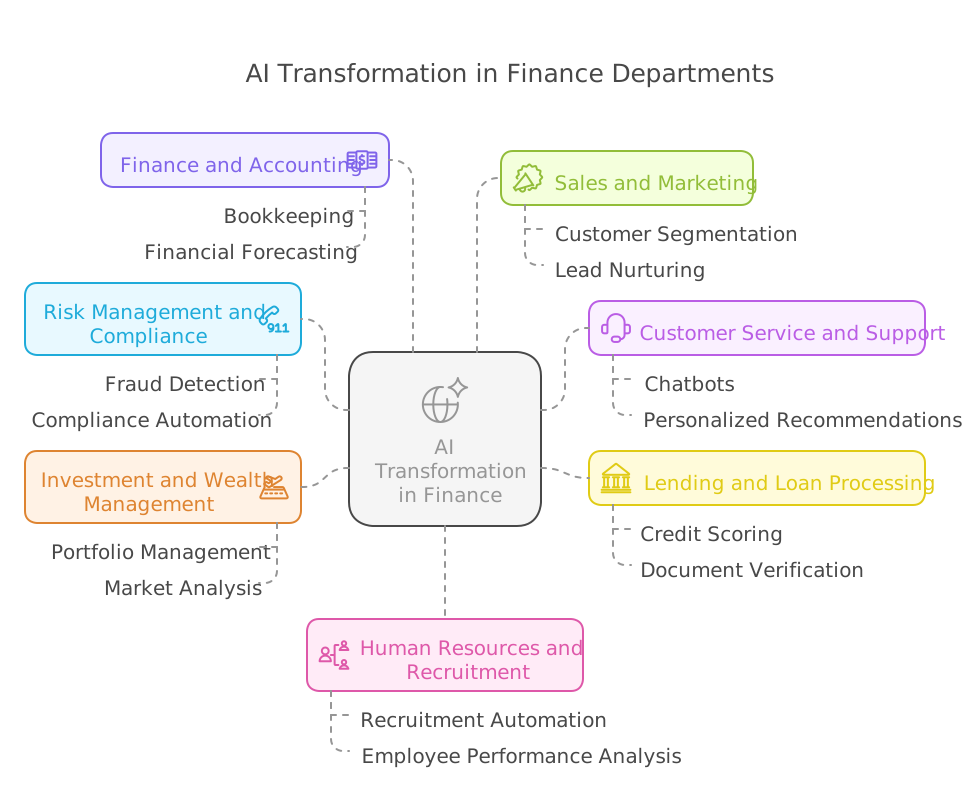
1. Risk Management and Compliance
Risk assessment and compliance are critical for every financial institution, and AI agents in finance are transforming how these functions operate. AI-powered tools analyze massive datasets to identify potential risks, detect fraudulent activities, and ensure adherence to regulatory requirements.
- Detect anomalies in transactions using machine learning models that recognize unusual patterns in real time to prevent fraud
- Automate compliance checks for adherence to regulations from IRDAI, RBI, SEBI in India, NAIC in the USA, and CBUAE in the UAE, minimizing penalty risk
- Assess credit risk by analyzing customer financial data in real time, helping banks and lenders reduce loan defaults
- Monitor transactions across global markets to identify and mitigate money laundering activities
- Use AI-powered predictive analytics to foresee potential risks before they impact operations
For deeper insight into compliance-specific AI agents, explore how AI agents in compliance automate regulatory workflows end to end.
2. Customer Service and Support
AI agents in finance, including AI-driven chatbots and virtual assistants, are transforming customer interactions by providing instant responses, resolving queries, and delivering personalized financial recommendations.
- 24/7 customer support with instant query resolution, eliminating long wait times
- Automated loan processing and credit approval assistance, reducing processing times from days to minutes
- Personalized financial advice based on customer behavior, transaction history, and spending patterns
- AI-driven sentiment analysis to gauge customer emotions and improve engagement strategies
- Proactive notifications for due payments, investment opportunities, and fraud alerts
3. Lending and Loan Processing
AI agents in finance are revolutionizing the lending process by automating credit scoring, fraud detection, and document verification, making loan approvals faster and more accurate.
- Faster loan approvals and disbursals using AI-based scoring models that assess applicant profiles instantly
- Improved credit risk assessment incorporating non-traditional data sources such as transaction patterns and digital footprints
- Reduced manual paperwork and human intervention, decreasing processing errors and operational costs
- AI-driven predictive modeling to identify potential defaulters before issuing loans
- Enhanced customer profiling and segmentation for customized loan products based on creditworthiness
Learn more about how AI agents in digital lending are cutting approval times by 80% for leading financial institutions.
4. Investment and Wealth Management
AI agents in finance, particularly AI-driven robo-advisors, are transforming how investment firms manage portfolios by analyzing market trends and delivering data-driven insights.
- Automated portfolio management with real-time adjustments based on market fluctuations
- Personalized investment strategies tailored to client preferences, risk tolerance, and financial goals
- Predictive analytics to forecast market movements for informed decision-making
- AI-powered sentiment analysis to assess market mood and predict stock trends
- Automated rebalancing of investment portfolios to maximize gains and minimize risks
See how AI agents for wealth management are helping asset managers deliver personalized advisory at scale.
5. Finance and Accounting
AI agents in finance are revolutionizing financial management by automating routine tasks such as bookkeeping, invoice processing, and financial forecasting.
- Reduced human errors in accounting, ensuring accurate financial records and compliance
- Efficient reconciliation of transactions by matching invoices, receipts, and ledgers using AI-driven automation
- Real-time financial reporting and predictive analytics for better budget and investment planning
- Fraud detection by analyzing discrepancies in accounting records and flagging suspicious transactions
- AI-driven expense management tools that track employee spending and optimize financial planning
6. Sales and Marketing
AI agents in finance are transforming marketing strategies for financial institutions by leveraging AI-powered analytics to identify customer behavior patterns and predict future trends.
- Data-driven customer segmentation and targeting for more personalized marketing campaigns
- AI-generated personalized financial product recommendations based on customer profiles
- Automated lead nurturing and conversion strategies using AI-driven insights
- Sentiment analysis to understand how customers perceive financial products
- AI-powered chatbots and virtual assistants for lead generation and follow-ups
7. Human Resources and Recruitment
AI agents in finance are revolutionizing HR functions by automating recruitment, employee performance analysis, and training recommendations.
- Screening candidates efficiently using AI-driven resume analysis
- Predicting employee attrition and suggesting retention strategies based on engagement levels
- Automating employee training with personalized learning modules
- AI-driven chatbots for answering HR-related queries
- Workforce planning by analyzing industry trends and internal talent gaps
8. Treasury and Cash Management
AI helps finance departments optimize liquidity management and cash flow forecasting.
- AI-powered predictive models for accurate cash flow forecasting and treasury operations
- Automated reconciliation of payments, reducing errors and improving transaction accuracy
- Optimization of working capital and investment planning based on real-time financial data
- AI-driven fraud detection to monitor treasury transactions and prevent financial losses
For institutions handling high-volume payments, see how AI agents for payments streamline reconciliation and fraud prevention across payment networks.
9. Regulatory Reporting and Governance
Compliance with financial regulations is a major challenge for finance companies, and AI simplifies the process.
- Automating regulatory reporting to ensure accuracy and adherence to financial guidelines
- AI-driven tools analyzing market and transactional data to detect compliance violations in real time
- Improving transparency in financial decision-making and reducing regulatory risks
- Enhancing audit trails and risk management by continuously monitoring financial activities
10. Debt Collection and Recovery
AI is improving debt collection strategies through automated and personalized solutions.
- AI-driven predictive analytics to identify high-risk defaulters and recommend proactive recovery strategies
- Automated messaging and reminders for overdue payments, reducing manual follow-ups
- Sentiment analysis to determine the best approach for customer engagement in debt collection
- Optimized repayment plans tailored to individual financial circumstances
11. Mergers and Acquisitions Analysis
AI is transforming due diligence and decision-making in mergers and acquisitions.
- AI-powered data analysis to assess the financial health of target companies
- Predictive modeling to forecast post-merger synergies and risks
- Automated document review to speed up legal and regulatory assessments
- AI-driven sentiment analysis to gauge market reactions to potential M&A deals
Ready to deploy AI agents across your financial operations?
What Industry Leaders Are Saying About AI Agents in Finance?
Top financial and technology executives consistently identify AI agents as the most transformative force in modern finance.
- Brian Moynihan, CEO of Bank of America: "AI agents are helping us deliver highly personalized financial services while maintaining compliance and risk management at scale."
- Elon Musk, CEO of Tesla and SpaceX, co-founder of OpenAI: "AI will fundamentally change the way financial systems operate. Automation and intelligence-driven decision-making will be the norm."
- Christine Lagarde, President of the European Central Bank: "Artificial intelligence will play a key role in shaping the future of banking and finance, ensuring more efficient, resilient, and accessible financial services."
- Sundar Pichai, CEO of Google: "AI will have a bigger impact on financial services than electricity or the internet ever had."
- Ginni Rometty, Former CEO of IBM: "In financial services, AI is not a tool of the future. It is a necessity for companies to remain competitive today."
Which Tools Are Best for Building AI Agents in Finance?
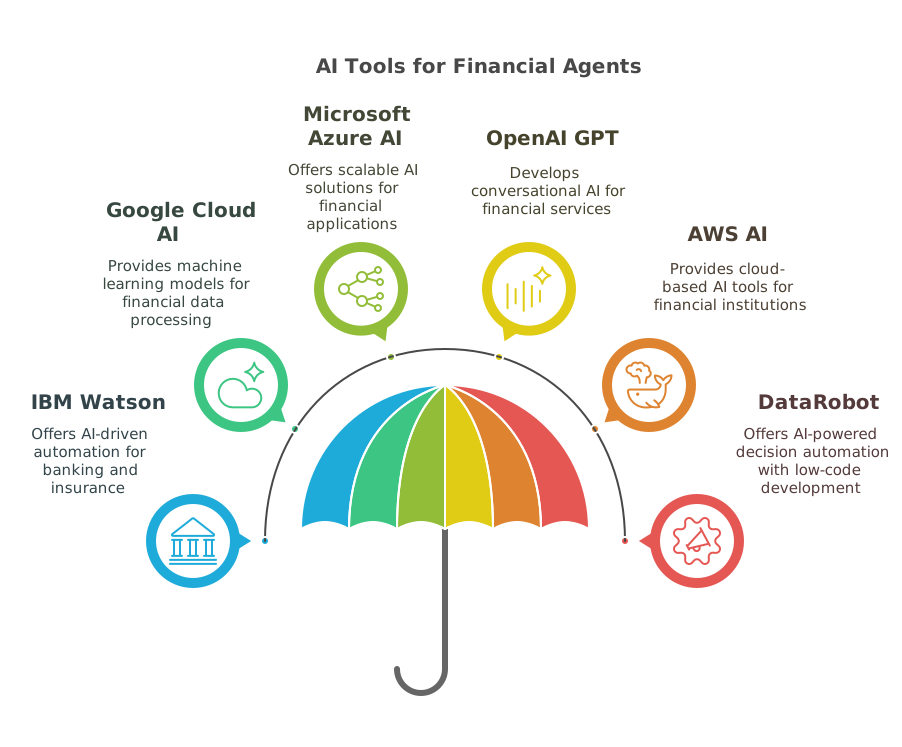
The best tools for building AI agents in finance include IBM Watson, Google Cloud AI, Microsoft Azure AI, OpenAI GPT, AWS AI, and DataRobot, each optimized for different financial workflows.
1. IBM Watson
IBM Watson offers advanced AI-driven automation for financial institutions. It enables banks, insurers, and investment firms to process vast amounts of financial data, detect fraud, and improve customer service through AI-powered virtual assistants.
| Feature | Capability |
|---|---|
| NLP | Chatbots and virtual assistants |
| Risk Management | AI-powered fraud detection |
| Compliance | Regulatory automation |
| Analytics | Predictive financial models |
2. Google Cloud AI
Google Cloud AI provides pre-trained and custom machine learning models designed for financial use cases, including credit risk analysis, automated trading, and customer service automation.
- TensorFlow-based deep learning for financial forecasting
- AI-powered risk assessment models for fraud detection
- AutoML capabilities for custom financial AI applications
- Scalable cloud infrastructure for high-speed AI processing
3. Microsoft Azure AI
Microsoft Azure AI offers a suite of tools for building AI-powered financial applications, including real-time transaction monitoring, chatbot development, and personalized customer experiences.
- AI-powered anomaly detection for fraud prevention
- Azure Bot Service for virtual financial assistants
- AI-driven credit scoring and loan approval automation
- High-security standards for financial compliance
4. OpenAI GPT
OpenAI's GPT models are widely used to develop intelligent AI agents that can understand and generate human-like text, making them ideal for finance-related chatbots, document processing, and automated financial advisory services.
- Advanced NLP for AI-powered financial assistants
- Automated report generation for banking and investment firms
- AI-driven customer interactions for wealth management
- Secure data handling for compliance with financial regulations
5. Amazon Web Services AI
AWS AI provides a suite of machine learning tools designed for the financial sector, enabling secure, scalable, and cost-effective AI deployment.
- AI-driven anti-money laundering (AML) solutions
- Automated underwriting and claims processing for insurance firms
- Predictive analytics for investment firms
- Highly scalable AI services for fintech applications
6. DataRobot
DataRobot offers an automated machine learning (AutoML) platform that helps financial institutions build AI models without requiring deep coding knowledge.
- AI-powered portfolio management for investment firms
- Automated fraud detection with real-time monitoring
- AI-driven forecasting for financial markets
- Low-code AI model development for financial applications
| Tool | Best For | Key Strength |
|---|---|---|
| IBM Watson | Banking, insurance | NLP and compliance automation |
| Google Cloud AI | Forecasting, trading | TensorFlow deep learning |
| Microsoft Azure AI | Transaction monitoring | Anomaly detection at scale |
| OpenAI GPT | Advisory, document processing | Natural language generation |
| AWS AI | AML, underwriting | Scalable cloud ML services |
| DataRobot | Portfolio management | Low-code AutoML platform |
How Can Financial Institutions Implement AI Agents Effectively?
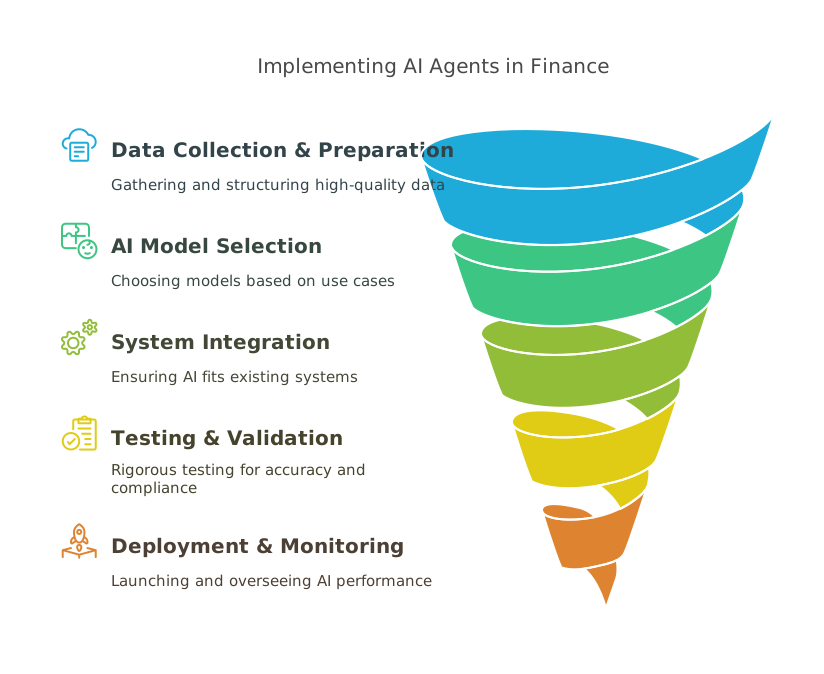
Financial institutions should follow a six-phase approach: identify business needs, prepare data, select the right AI model, integrate with existing systems, test rigorously, and deploy with continuous monitoring.
Implementing AI agents in finance requires a well-structured approach to ensure efficiency, security, and compliance with regulatory frameworks. Financial organizations must carefully plan each stage.
1. Identify Business Needs
The first step in implementing AI agents in finance is determining the specific business needs and challenges that AI can address. Financial institutions should analyze which operations require automation, optimization, or predictive intelligence. AI agents in finance can be integrated into customer service, fraud detection, risk management, regulatory compliance, investment advisory, and loan underwriting. Clearly defining the objective ensures that the AI model is aligned with business goals, enhances efficiency, and delivers measurable value. For instance, a bank looking to automate loan application processing can deploy AI agents in finance to assess creditworthiness and approve loans faster while reducing manual intervention.
2. Data Collection and Preparation
AI agents in finance require high-quality, structured financial data to function effectively. Data must be collected from multiple sources, including customer transactions, credit reports, financial statements, stock market data, and compliance records. Before AI training begins, this data needs to be cleaned, labeled, and structured to remove inconsistencies and ensure accuracy. Additionally, data security is a crucial aspect, as financial institutions handle sensitive customer information. Ensuring compliance with GDPR, CCPA, and PCI DSS regulations is necessary to protect data privacy. For example, an insurance company using AI agents in finance for risk assessment must ensure that past claims, customer profiles, and actuarial data are well-structured and free from bias before feeding it into the AI model.
3. Choose the Right AI Model
Selecting the appropriate AI model is crucial for maximizing the effectiveness of AI agents in finance, as it depends on the financial use case and the type of data being processed. Various AI techniques serve different purposes:
- Natural Language Processing (NLP) is ideal for chatbots, voice assistants, and document automation
- Machine Learning (ML) algorithms help in fraud detection, financial forecasting, and risk analysis
- Predictive Analytics is used for loan default prediction, stock market analysis, and portfolio optimization
- Computer Vision can enhance automated identity verification and KYC (Know Your Customer) processes
For example, a hedge fund implementing algorithmic trading would benefit from AI agents in finance powered by predictive analytics models that analyze market trends and execute trades autonomously. Learn how AI agents in hedge funds use these models to outperform traditional strategies.
4. Integration with Existing Systems
Seamless integration of AI agents in finance with a financial institution's existing infrastructure is critical for smooth operations. These AI solutions must be compatible with CRM systems, ERP software, core banking platforms, and risk management tools. Integrating AI agents in finance into these systems requires robust APIs, cloud solutions, and real-time data synchronization to avoid delays or errors.
Furthermore, financial AI models must comply with industry security standards and regulatory requirements to prevent data breaches and unauthorized access. For instance, a bank integrating an AI-powered risk assessment tool must ensure that it can work seamlessly with its loan management and credit scoring platforms, enhancing decision-making without disrupting existing workflows.
| Phase | Duration | Key Activities |
|---|---|---|
| Business Needs Analysis | 2 to 4 weeks | Stakeholder interviews, use case mapping |
| Data Collection and Prep | 4 to 6 weeks | Data audit, cleaning, labeling, security review |
| AI Model Selection | 2 to 3 weeks | Model evaluation, vendor assessment |
| System Integration | 4 to 6 weeks | API development, platform integration |
| Testing and Validation | 3 to 4 weeks | UAT, compliance testing, security testing |
| Deployment and Monitoring | Ongoing | Performance monitoring, retraining cycles |
| Total | 15 to 23 weeks | End-to-end implementation |
5. Testing and Validation
Before full deployment, AI agents in finance must undergo rigorous testing and validation to ensure accuracy, reliability, and compliance with financial regulations. Model validation involves running AI algorithms on historical financial data to assess their effectiveness.
Regulatory compliance testing ensures that AI-driven decisions align with laws like AML (Anti-Money Laundering) and Basel III banking regulations. Additionally, user acceptance testing (UAT) allows financial teams to evaluate AI agents in finance in real-world scenarios before large-scale implementation.
Security testing is also critical to identify vulnerabilities and prevent cyber threats. For instance, a fintech startup launching an AI-driven fraud detection system must test it against past fraud cases to ensure it accurately identifies suspicious activities without generating false positives.
6. Deployment and Monitoring
Once AI agents in finance have been tested and validated, they are ready for deployment. However, launching AI in the financial sector is not a one-time process. It requires continuous monitoring, updates, and optimizations to maintain high performance.
AI agents in finance must be regularly retrained with new financial data to ensure their predictions remain accurate. Institutions should implement real-time monitoring systems to track AI performance and identify potential biases or errors. Additionally, AI must comply with evolving financial regulations, necessitating ongoing audits and improvements.
For example, a wealth management firm using AI-driven robo-advisors must ensure that investment recommendations continuously adapt to changing market conditions and customer preferences to deliver optimal results.
How Are AI Agents Transforming Different Sectors of Finance?
AI agents are transforming banking, insurance, investment management, lending, compliance, trading, payments, and personal finance with sector-specific automation and intelligence.
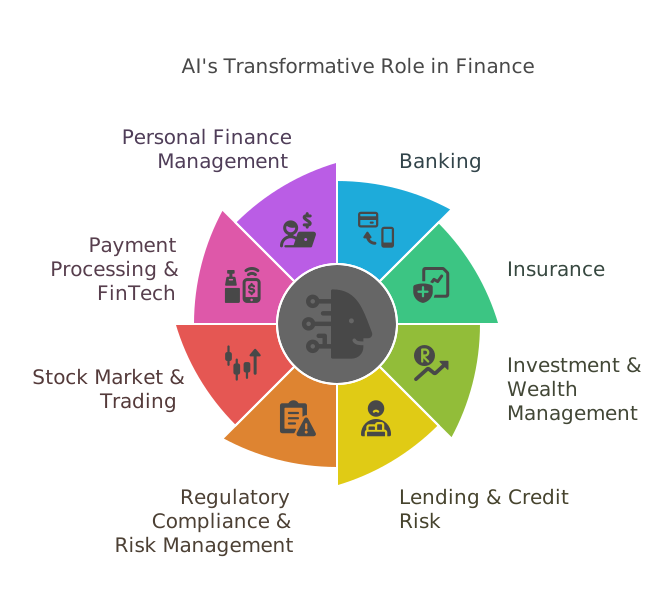
1. Banking
AI agents in finance have significantly enhanced the efficiency and security of banking operations. Banks leverage AI for fraud detection, transaction monitoring, and customer service automation, ensuring faster and more reliable financial processes.
Machine learning algorithms used in AI agents in finance can detect anomalies in financial transactions, flagging potential fraud in real time. Additionally, AI-powered chatbots and virtual assistants manage customer inquiries, loan applications, and account management, significantly reducing human workload.
Example: JPMorgan Chase's AI system, COIN, automates legal document review, saving thousands of human work hours.
2. Insurance
AI has streamlined insurance underwriting, risk assessment, and claims processing. AI models analyze vast amounts of historical data to predict risks and set accurate insurance premiums. AI-powered chatbots also assist in policy selection, claim filing, and customer support. Computer vision technology helps process damage assessments in auto and property insurance claims.
Example: Lemonade, an AI-driven insurance company, uses AI to process claims within minutes, improving customer satisfaction.
3. Investment and Wealth Management
AI-driven robo-advisors provide automated, algorithm-based investment advice to clients. These AI systems analyze market trends, economic indicators, and personal risk profiles to recommend personalized investment strategies. AI also assists hedge funds and asset managers in predicting stock market movements through predictive analytics.
Example: Wealthfront and Betterment use AI-powered robo-advisors to create customized investment portfolios for clients. For a deeper dive into AI-powered trading, see how AI agents for stock trading execute high-frequency strategies with real-time market data.
4. Lending and Credit Risk
Traditional credit scoring methods rely on limited financial history, but AI enhances credit risk assessment by analyzing alternative data sources such as transaction behavior, employment patterns, and social signals. AI models can predict loan default probabilities with greater accuracy, helping lenders make faster and fairer credit decisions.
Example: ZestFinance uses AI-powered credit scoring models to provide loans to borrowers with limited credit history.
5. Regulatory Compliance and Risk Management
AI plays a crucial role in automating regulatory compliance and ensuring financial institutions meet legal requirements. AI systems analyze vast amounts of transactional data, identify suspicious activities, and report potential money laundering or financial crimes. Regulatory compliance AI also monitors policy changes in real time and updates systems accordingly.
Example: HSBC uses AI-powered solutions to detect and prevent money laundering through its financial systems.
6. Stock Market and Trading
AI-driven algorithmic trading systems execute trades at high speeds based on market trends, historical patterns, and real-time data analysis. AI also helps traders by conducting sentiment analysis on financial news, social media, and economic indicators to predict market movements.
Example: Renaissance Technologies, a hedge fund, uses AI-driven algorithms for predictive trading strategies, outperforming traditional traders. Explore how AI agents in hedge funds are using these strategies to generate alpha.
7. Payment Processing and FinTech
FinTech companies leverage AI for seamless digital transactions, fraud detection, and financial inclusion. AI-driven payment processors analyze user behavior to prevent unauthorized transactions, enhancing security in digital payments. AI also helps detect money laundering activities in payment networks.
Example: PayPal uses AI to detect fraudulent transactions in real time, minimizing financial losses. For a complete breakdown, see how AI agents for payments protect transaction integrity at scale.
8. Personal Finance Management
AI agents in personal finance applications help users track expenses, set budgets, and provide smart financial insights. AI-powered financial assistants analyze spending patterns and provide customized savings recommendations.
Example: Mint and Cleo use AI to provide users with personalized financial advice and budgeting assistance.
What Are the Measurable Benefits of AI Agents in Finance?
AI agents in finance deliver 30 to 50% cost reductions, 3x faster processing speeds, near-zero compliance gaps, and significantly improved customer satisfaction scores.
The financial industry is undergoing a digital revolution, with AI agents in finance at the forefront of this transformation. These intelligent systems are reshaping financial institutions, driving efficiency, security, and personalized customer experiences.
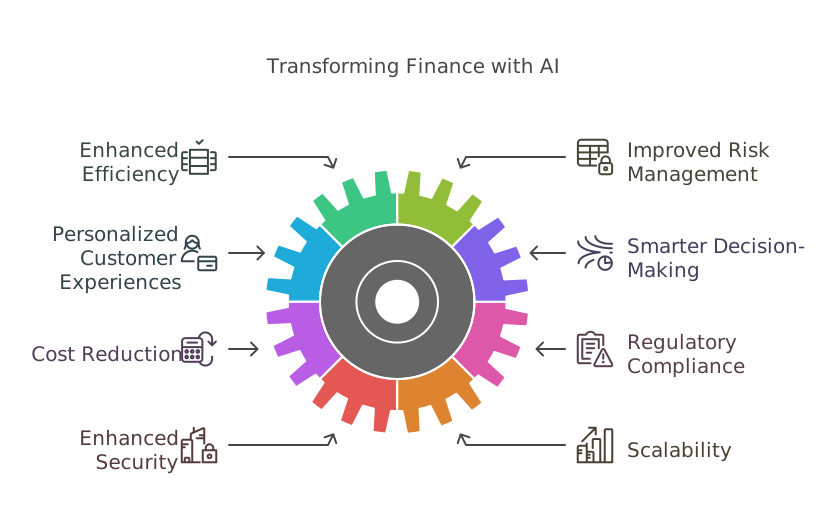
1. Enhanced Efficiency and Automation
AI agents in finance are transforming financial operations by automating time-consuming and repetitive tasks such as data entry, transaction processing, and compliance checks. This automation enhances operational efficiency, reduces costs, and improves overall accuracy.
- Faster processing times for loans, payments, and transactions
- Reduced manual intervention, minimizing errors and operational costs
- AI-powered bots handling routine customer queries, freeing up human employees for complex tasks
2. Improved Risk Management and Fraud Detection
Financial institutions face significant risks related to fraud, cyber threats, and regulatory non-compliance. AI agents in finance play a crucial role in mitigating these risks by leveraging advanced AI-driven security and compliance solutions.
- Using machine learning models to detect fraudulent activities in real time
- Identifying unusual transaction patterns that indicate potential financial crimes
- Automating compliance checks to ensure adherence to regulatory requirements
3. Personalized Customer Experiences
AI agents in finance empower financial institutions to deliver tailored services by analyzing customer behavior and financial needs.
- AI-powered chatbots providing instant and personalized financial advice
- Predictive analytics to offer customized investment and loan recommendations
- Automated financial planning tools that help customers track expenses and savings
4. Faster and Smarter Decision-Making
AI agents in finance process large datasets at high speed, delivering actionable insights that drive smarter financial decision-making.
- Real-time credit scoring and risk assessment for faster loan approvals
- AI-powered portfolio management for optimized investment strategies
- Market trend analysis to assist in strategic financial planning
5. Cost Reduction and Operational Efficiency
By automating financial processes, AI agents in finance significantly reduce costs associated with manual labor and inefficiencies.
- Lower operational expenses for financial institutions
- Reduced paperwork and administrative burdens
- Increased productivity as AI handles routine tasks efficiently
6. Regulatory Compliance and Reporting
Keeping up with evolving financial regulations is a major challenge for financial institutions. AI agents in finance simplify compliance management by automating regulatory processes.
- Automating reporting and documentation processes
- Monitoring transactions to detect compliance breaches in real time
- Providing audit trails and real-time insights to assist regulatory bodies
7. Enhanced Security and Data Protection
AI agents in finance play a crucial role in strengthening cybersecurity within the financial sector by identifying vulnerabilities, preventing cyber threats, and enhancing fraud detection.
- Identifying vulnerabilities and preventing cyber threats
- Using biometric authentication and AI-driven fraud detection
- Monitoring real-time data access to prevent unauthorized activities
8. Scalability and Future-Readiness
As financial institutions expand, AI agents in finance ensure scalability by seamlessly adapting to increasing demands and optimizing operational efficiency.
- Manage growing customer bases without compromising service quality
- Handle large volumes of transactions and financial data efficiently
- Support the integration of emerging technologies such as blockchain and IoT in finance
Want to see these benefits quantified for your specific financial operations?
What Are the Technical and Ethical Challenges of AI Agents in Finance?
The primary challenges include data quality issues, algorithmic bias, cybersecurity risks, legacy system integration, regulatory compliance complexity, transparency concerns, and workforce displacement.
Despite the significant advantages, the implementation of AI agents in finance comes with technical and ethical challenges. Addressing these challenges is crucial for financial institutions to ensure transparency, security, and regulatory compliance.
Technical Challenges
1. Data Quality and Availability
AI agents in finance require vast amounts of high-quality financial data to operate effectively. However, financial institutions often face challenges related to data fragmentation, inconsistencies, and regulatory constraints that impact AI performance.
- Fragmented across multiple platforms and legacy systems
- Incomplete or inconsistent due to manual data entry errors
- Subject to strict privacy regulations, limiting data access and usage
To overcome this, financial institutions need robust data integration frameworks and advanced data cleansing techniques to ensure accuracy and reliability.
2. Algorithmic Bias and Fairness
AI agents in finance have the potential to revolutionize the industry, but they can also inherit biases from historical financial data, leading to unfair or discriminatory decisions. This can impact loan approvals, credit scoring, fraud detection, risk assessment, and investment recommendations.
Mitigating bias requires continuous monitoring, diverse training datasets, and regulatory oversight to ensure fairness and inclusivity.
3. Cybersecurity Risks and Threats
As AI agents in finance become more prevalent, they also become prime targets for cybercriminals. Financial institutions must address AI-driven phishing and fraud attempts, data breaches exposing sensitive customer information, and adversarial attacks manipulating AI models to produce misleading outputs.
To enhance security, financial firms must implement AI-driven threat detection, encryption, and robust cybersecurity protocols.
4. Integration with Legacy Systems
Many financial institutions still rely on outdated IT infrastructures, making it difficult to implement AI agents in finance effectively. Legacy systems often lack compatibility with modern AI-driven solutions, creating challenges in integration and scalability. High costs of upgrading existing systems, resistance from internal teams, and technical difficulties in migration all present obstacles.
A phased AI adoption strategy and hybrid integration models can help bridge the gap between legacy systems and modern AI-driven solutions.
5. Regulatory and Compliance Issues
The financial sector operates under strict regulatory frameworks, and AI agents in finance must comply with evolving legal requirements to ensure transparency, security, and ethical decision-making. This includes keeping up with evolving AI-related financial regulations, ensuring AI-driven decisions are explainable and auditable, and avoiding conflicts with data privacy laws such as GDPR.
Financial institutions must work closely with regulators to establish AI governance frameworks that balance innovation with compliance.
Ethical Challenges
1. Transparency and Explainability
Many AI models, especially deep learning systems, operate as "black boxes," making it difficult to explain how AI-driven decisions are made. This lack of transparency raises ethical concerns, particularly when customers do not understand why they were denied loans or financial services, financial institutions cannot justify AI-driven decisions to regulators, and there is a lack of accountability when AI systems make errors.
To address this, AI models should incorporate explainable AI (XAI) techniques, ensuring decisions are interpretable and justifiable.
2. Job Displacement and Workforce Impact
The rise of AI agents in finance is transforming the financial sector, but it also raises concerns about automation-driven job displacement in traditional financial roles. Companies must invest in workforce training programs to equip employees with AI-related skills and create new job opportunities.
3. Consumer Privacy and Data Protection
AI agents in finance rely on vast amounts of personal financial data, raising ethical concerns around data privacy, security, and transparency. Adopting transparent data policies and implementing privacy-preserving AI techniques such as federated learning can help mitigate these concerns.
4. AI Decision-Making Autonomy
Financial institutions are increasingly adopting AI agents in finance for autonomous decision-making in areas like trading, lending, and fraud detection. A human-in-the-loop approach, where AI recommendations are reviewed by human experts, can help balance automation with ethical accountability.
What Do Real-World Case Studies Reveal About AI Agent ROI in Finance?
Real-world case studies show that AI agents in finance deliver measurable ROI through faster processing, lower fraud losses, improved compliance accuracy, and reduced operational costs across banking, lending, and wealth management.
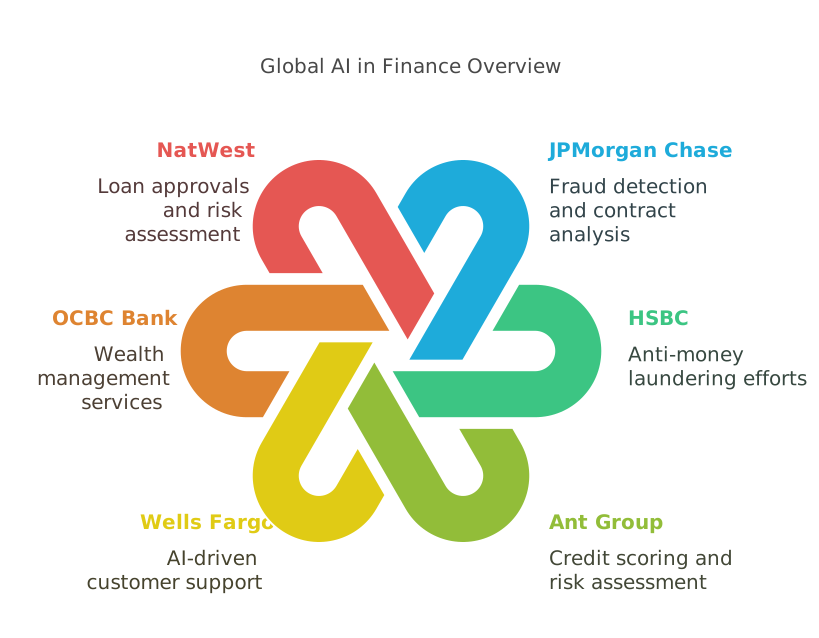
1. JPMorgan Chase: AI in Fraud Detection and Contract Analysis (USA)
JPMorgan Chase, one of the largest banks in the world, has integrated AI in various aspects of its operations, particularly in fraud detection and contract analysis.
AI Implementation: JPMorgan's AI-powered fraud detection system uses machine learning models to analyze millions of transactions in real time, identifying unusual patterns and preventing fraudulent activities. The bank introduced COiN (Contract Intelligence), an AI system that automates legal document review, replacing 360,000 hours of manual work with just seconds of AI processing.
Results: Increased fraud detection accuracy and reduced false positives. Significant cost savings and improved efficiency in contract review.
2. HSBC: AI for Anti-Money Laundering (UK)
HSBC, a global financial leader, uses AI to strengthen its anti-money laundering compliance and regulatory framework.
AI Implementation: HSBC's AI-driven AML detection system analyzes transaction data and customer behavior to detect suspicious activities. The bank employs natural language processing (NLP) to scan and analyze financial crime reports and regulatory documents.
Results: More accurate and faster detection of financial crimes. Reduction in compliance costs and human intervention for regulatory checks.
3. Ant Group: AI-Powered Credit Scoring and Risk Assessment (China)
Ant Group, the fintech arm of Alibaba, has built one of the most advanced AI-powered financial ecosystems, particularly in credit risk assessment.
AI Implementation: Zhima Credit (Sesame Credit), an AI-driven credit scoring system, evaluates customer creditworthiness based on digital footprints, transaction history, and social behavior. The AI model assesses over 3,000 variables to determine lending risks and automate credit approvals.
Results: Faster loan approvals, with millions of loans processed instantly. Increased financial inclusion, providing credit access to individuals and small businesses without traditional credit histories.
4. Wells Fargo: AI-Driven Chatbots and Customer Support (USA)
Wells Fargo has embraced AI to improve customer interactions and enhance service quality.
AI Implementation: The bank launched an AI-powered chatbot to assist customers with account inquiries, transaction details, and financial advice. AI agents personalize banking recommendations based on customer behavior and spending patterns.
Results: Improved customer satisfaction with faster query resolution. Enhanced efficiency by reducing the workload on human agents.
5. OCBC Bank: AI for Wealth Management (Singapore)
OCBC Bank has implemented AI-driven solutions to enhance wealth management services and investment advisory.
AI Implementation: The bank launched Emma, an AI-powered chatbot that provides real-time investment advice and financial insights. AI-driven robo-advisors analyze market trends and recommend personalized investment strategies.
Results: Increased engagement from retail investors. Improved portfolio performance with AI-driven recommendations.
6. NatWest: AI for Loan Approvals and Risk Assessment (UK)
NatWest Bank has adopted AI agents to enhance credit decision-making and risk management.
AI Implementation: AI-powered loan approval systems assess applications within minutes, reducing processing times significantly. The bank employs predictive analytics to identify potential loan defaulters and mitigate risks in advance.
Results: Faster loan approvals and increased efficiency in credit risk assessment. Enhanced accuracy in predicting customer repayment behavior.
7. State Bank of India: AI in Customer Engagement (India)
SBI, India's largest public-sector bank, is leveraging AI to improve customer service and streamline banking operations.
AI Implementation: SBI introduced SIA, an AI-powered virtual assistant that handles customer queries related to accounts, loans, and financial transactions. AI-based fraud detection algorithms monitor banking transactions for suspicious activities.
Results: Over 3 million queries handled by AI, reducing response times and operational workload. Strengthened fraud detection mechanisms, preventing unauthorized transactions.
8. Goldman Sachs: AI in Trading and Investment Strategies (USA)
Goldman Sachs has adopted AI to optimize trading strategies and enhance portfolio management.
AI Implementation: AI-driven trading algorithms analyze vast amounts of market data to execute trades at optimal prices. Predictive analytics assist investment managers in forecasting market movements.
Results: Improved accuracy in trading decisions and market predictions. Enhanced profitability through AI-optimized investment strategies.
How Does Digiqt Deliver Results?
Digiqt follows a proven delivery methodology to ensure measurable outcomes for every engagement.
1. Discovery and Requirements
Digiqt starts with a detailed assessment of your current operations, technology stack, and business objectives. This phase identifies the highest-impact opportunities and establishes baseline KPIs for measuring success.
2. Solution Design
Based on the discovery findings, Digiqt architects a solution tailored to your specific workflows and integration requirements. Every design decision is documented and reviewed with your team before development begins.
3. Iterative Build and Testing
Digiqt builds in focused sprints, delivering working functionality every two weeks. Each sprint includes rigorous testing, stakeholder review, and refinement based on real feedback from your team.
4. Deployment and Ongoing Optimization
After thorough QA and UAT, Digiqt deploys the solution with monitoring dashboards and performance tracking. The team continues optimizing based on production data and evolving business requirements.
Ready to discuss your requirements?
Why Should Banks, Asset Managers, and Fintechs Choose Digiqt?
Digiqt combines deep financial domain expertise with production-grade AI engineering to deliver agents that integrate with existing systems, satisfy regulators, and scale with your business.
1. Financial Domain Expertise
Digiqt's engineering team has built AI systems for banking, lending, trading, compliance, and wealth management. They understand the regulatory constraints, data sensitivity requirements, and operational workflows unique to financial services.
2. Production-Grade Architecture
Every AI agent Digiqt builds is designed for production, not just proof of concept. That means enterprise security, fault tolerance, real-time monitoring, and seamless integration with legacy banking infrastructure.
3. Regulatory-Ready Explainability
Digiqt builds explainable AI into every agent, ensuring that audit teams, compliance officers, and regulators can trace every automated decision back to its data inputs and model logic.
4. Speed to Value
Digiqt's phased deployment methodology moves from business requirements to live production in 12 to 20 weeks, so financial institutions start seeing ROI within one quarter.
5. Ongoing Optimization
AI agents are not set-and-forget systems. Digiqt provides continuous model monitoring, retraining, and performance optimization to ensure agents stay accurate as markets, regulations, and customer behaviors evolve.
What Is the Future of AI Agents in Finance?
AI agents in finance are evolving toward full autonomous operation, where multi-agent systems will handle end-to-end financial workflows from customer onboarding through compliance reporting with minimal human oversight.
AI agents in finance are revolutionizing the financial industry, delivering unparalleled efficiency, accuracy, and automation across banking, lending, investment, and risk management. By leveraging AI-powered solutions, financial institutions can enhance customer experiences, streamline operations, and make data-driven decisions with greater precision. From fraud detection and compliance to personalized financial services, AI is redefining the way finance functions.
However, integrating AI agents in finance comes with challenges, including regulatory compliance, data privacy concerns, and algorithmic bias. To maximize AI's benefits while ensuring ethical and responsible implementation, financial institutions must adopt transparent AI frameworks, strengthen cybersecurity, and maintain human oversight in critical decision-making processes.
The window for competitive advantage is narrowing. Financial institutions that deploy AI agents today will set the benchmark for efficiency, security, and customer satisfaction in the sector. Those that wait will face rising costs, slower operations, and accelerating customer attrition to AI-native competitors.
The time to act is now. Every quarter you delay, AI-native competitors gain ground.
Schedule a Discovery Call with Digiqt
Visit Digiqt to explore how we build AI agents for banks, asset managers, and fintechs.
Frequently Asked Questions
What are AI agents in finance?
AI agents in finance are autonomous software systems that use ML and NLP to execute financial tasks like trading, compliance, and fraud detection without manual intervention.
How do AI agents reduce operational costs for banks?
AI agents automate repetitive processes like document review and transaction monitoring, cutting manual labor costs by 40 to 60 percent.
Which financial departments benefit most from AI agents?
Risk management, compliance, lending, treasury, and customer service departments see the highest ROI from AI agent deployment.
How long does it take to deploy AI agents in a financial institution?
A phased deployment typically takes 12 to 24 weeks from pilot to production depending on system complexity and data readiness.
Are AI agents in finance compliant with banking regulations?
Yes, enterprise AI agents are built with explainability, audit trails, and regulatory frameworks like Basel III and AML baked in.
What is the ROI of AI agents for financial services firms?
Financial firms report 30 to 50 percent cost reduction and 3x faster processing within the first year of AI agent deployment.
Can AI agents handle real-time fraud detection in banking?
Yes, AI agents analyze millions of transactions per second using ML pattern recognition to flag fraud in real time.
How do AI agents improve lending and credit decisions?
AI agents assess creditworthiness using alternative data sources and predictive models, reducing default rates by up to 25 percent.
















